
Julia & Romeo - Liebe ist ein Schlachtfeld
Operating in a register of unbridled creative excess, this audacious genre hybrid reimagines Shakespearean…
115 min

Water has long served as cinema's most mutable metaphor — a medium of transformation, disappearance, and the uncanny persistence of memory beneath calm surfaces. This film draws on that tradition with haunting precision, opening on a lake at night where two young companions float on their backs, eyes trained skyward as a meteor streaks across the darkness. In the space between one breath and the next, Silvy vanishes beneath the water without a trace, leaving Sam thrashing in confusion and launching a lifelong search for meaning in her absence. The sequence is staged with an almost supernatural stillness, the camera lingering on the disrupted surface until the ripples flatten into silence. Decades later, Sam has reshaped his grief into professional purpose, becoming a psychologist who studies the architecture of the mind — perhaps hoping to locate the chamber where lost loved ones continue to exist. His return to his hometown to lay his father to rest strips away the clinical distance he has carefully constructed. The landscape itself seems to conspire against his composure: familiar paths, weathered buildings, and the ever-present lake all conspire to pull him backward through time. Then Ruby appears, a woman whose mannerisms, cadence of speech, and unsettling familiarity echo Silvy with an almost supernatural fidelity. The film navigates the treacherous territory between psychological drama and spectral romance, never quite committing to either interpretation and becoming richer for its ambiguity. Is Ruby a reincarnation, a ghost, or simply a projection of unresolved longing? The narrative refuses easy answers, instead layering suggestive details — a gesture, a half-remembered phrase, the quality of light on water — that accumulate into something more emotionally truthful than any literal explanation could provide. Performance choices ground the otherworldly premise in flesh and vulnerability. The actors convey the ache of recognition, the terror and exhilaration of encountering something that should not exist yet feels undeniably real. Cinematography bathes the story in a twilight palette where past and present blur at the edges, and the score avoids sentimental manipulation in favor of sparse, melancholic motifs. The result is a meditation on how the people we lose never truly leave us — they simply change form, waiting in the places we abandoned, patient as water.
Water has long served as cinema's most mutable metaphor — a medium of transformation, disappearance, and the uncanny persistence of memory beneath calm surfaces. This film draws on that tradition with haunting precision, opening on a lake at night where two young companions float on their backs, eyes trained skyward as a meteor streaks across the darkness. In the space between one breath and the next, Silvy vanishes beneath the water without a trace, leaving Sam thrashing in confusion and launching a lifelong search for meaning in her absence. The sequence is staged with an almost supernatural stillness, the camera lingering on the disrupted surface until the ripples flatten into silence. Decades later, Sam has reshaped his grief into professional purpose, becoming a psychologist who studies the architecture of the mind — perhaps hoping to locate the chamber where lost loved ones continue to exist. His return to his hometown to lay his father to rest strips away the clinical distance he has carefully constructed. The landscape itself seems to conspire against his composure: familiar paths, weathered buildings, and the ever-present lake all conspire to pull him backward through time. Then Ruby appears, a woman whose mannerisms, cadence of speech, and unsettling familiarity echo Silvy with an almost supernatural fidelity. The film navigates the treacherous territory between psychological drama and spectral romance, never quite committing to either interpretation and becoming richer for its ambiguity. Is Ruby a reincarnation, a ghost, or simply a projection of unresolved longing? The narrative refuses easy answers, instead layering suggestive details — a gesture, a half-remembered phrase, the quality of light on water — that accumulate into something more emotionally truthful than any literal explanation could provide. Performance choices ground the otherworldly premise in flesh and vulnerability. The actors convey the ache of recognition, the terror and exhilaration of encountering something that should not exist yet feels undeniably real. Cinematography bathes the story in a twilight palette where past and present blur at the edges, and the score avoids sentimental manipulation in favor of sparse, melancholic motifs. The result is a meditation on how the people we lose never truly leave us — they simply change form, waiting in the places we abandoned, patient as water.
— Curator's log, recorded 1962±25 BCE
Operating in a register of unbridled creative excess, this audacious genre hybrid reimagines Shakespearean…

Constantin Brâncuși stands as one of the towering figures of modern sculpture, an artist who stripped form…

The American frontier of the 1850s serves as the punishing backdrop for this morally intricate western-horror…
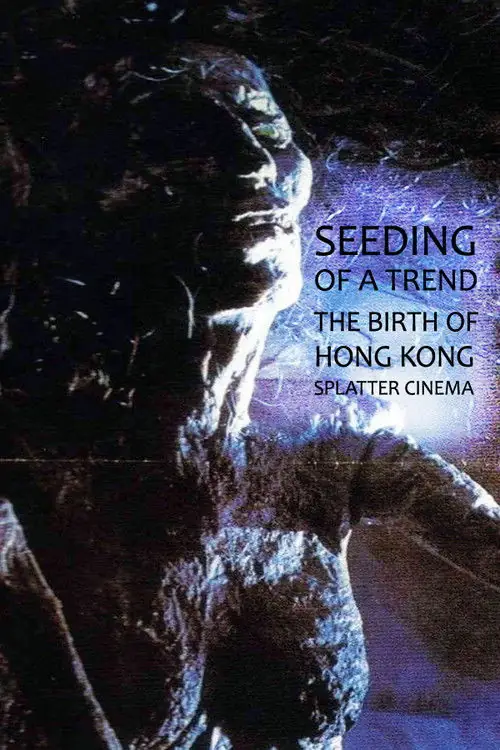
Hong Kong cinema's relationship with extreme on-screen violence has long fascinated scholars and…