
Till Human Voices Wake Us
Water has long served as cinema's most mutable metaphor — a medium of transformation, disappearance, and the…
152 min

The American frontier of the 1850s serves as the punishing backdrop for this morally intricate western-horror hybrid, a film that wields genre conventions as instruments of philosophical inquiry. At its heart travels a widowed physician, a man of empirical rationality who has staked his identity on the proposition that every phenomenon has a material explanation. He is hired — reluctantly, against his better judgment — to escort a formerly enslaved woman and her enigmatic daughter on a grueling five-day trek across territory soaked in blood and superstition. The mother insists the child is possessed by a malevolent force; the doctor counters with a diagnosis of illness, a clinical label that provides the comfort of taxonomy without solving the mystery. The girl herself constitutes the narrative's most unsettling presence. Wherever she reaches, living organisms perish — plants wither, animals collapse, and the air itself seems to thicken with invisible decay. The film never settles the question of whether this constitutes supernatural agency or an unclassifiable medical condition, and this ambiguity is its greatest strength. The western landscape, rendered in parched widescreen compositions that emphasize the indifference of nature to human suffering, becomes a testing ground for competing worldviews: faith against reason, the sacred against the scientific, the unknowable against the merely undiagnosed. The dynamic between the three travelers evolves through a series of encounters that test each character's convictions to the breaking point. The physician's certainty erodes as the evidence mounts beyond his explanatory frameworks. The mother's belief hardens into something closer to desperation. And the girl — silent, watchful, lethal — remains opaque, a blank screen onto which the adults project their deepest fears. The performances navigate this triangular tension with remarkable restraint, communicating through glances and physical distance what dialogue deliberately withholds. Period detail grounds the supernatural elements in tactile reality: the grime under fingernails, the creak of wagon wheels, the flies that gather with ominous persistence. The cinematography favors natural light that bleeds across the horizon at dusk, transforming the frontier into a liminal space where the boundary between the explainable and the inexplicable grows porous. The film ultimately argues that the true horror of the American West lay not in its violence but in its capacity to expose the limits of human understanding — to confront travelers with phenomena that neither prayer nor pharmacopoeia could resolve.
The American frontier of the 1850s serves as the punishing backdrop for this morally intricate western-horror hybrid, a film that wields genre conventions as instruments of philosophical inquiry. At its heart travels a widowed physician, a man of empirical rationality who has staked his identity on the proposition that every phenomenon has a material explanation. He is hired — reluctantly, against his better judgment — to escort a formerly enslaved woman and her enigmatic daughter on a grueling five-day trek across territory soaked in blood and superstition. The mother insists the child is possessed by a malevolent force; the doctor counters with a diagnosis of illness, a clinical label that provides the comfort of taxonomy without solving the mystery. The girl herself constitutes the narrative's most unsettling presence. Wherever she reaches, living organisms perish — plants wither, animals collapse, and the air itself seems to thicken with invisible decay. The film never settles the question of whether this constitutes supernatural agency or an unclassifiable medical condition, and this ambiguity is its greatest strength. The western landscape, rendered in parched widescreen compositions that emphasize the indifference of nature to human suffering, becomes a testing ground for competing worldviews: faith against reason, the sacred against the scientific, the unknowable against the merely undiagnosed. The dynamic between the three travelers evolves through a series of encounters that test each character's convictions to the breaking point. The physician's certainty erodes as the evidence mounts beyond his explanatory frameworks. The mother's belief hardens into something closer to desperation. And the girl — silent, watchful, lethal — remains opaque, a blank screen onto which the adults project their deepest fears. The performances navigate this triangular tension with remarkable restraint, communicating through glances and physical distance what dialogue deliberately withholds. Period detail grounds the supernatural elements in tactile reality: the grime under fingernails, the creak of wagon wheels, the flies that gather with ominous persistence. The cinematography favors natural light that bleeds across the horizon at dusk, transforming the frontier into a liminal space where the boundary between the explainable and the inexplicable grows porous. The film ultimately argues that the true horror of the American West lay not in its violence but in its capacity to expose the limits of human understanding — to confront travelers with phenomena that neither prayer nor pharmacopoeia could resolve.
— Curator's log, recorded 1999±25 BCE
Water has long served as cinema's most mutable metaphor — a medium of transformation, disappearance, and the…

Operating in a register of unbridled creative excess, this audacious genre hybrid reimagines Shakespearean…

Constantin Brâncuși stands as one of the towering figures of modern sculpture, an artist who stripped form…
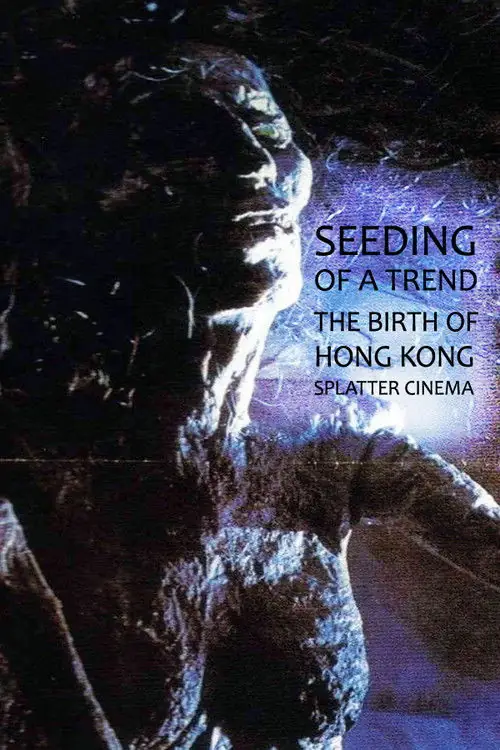
Hong Kong cinema's relationship with extreme on-screen violence has long fascinated scholars and…