
Till Human Voices Wake Us
Water has long served as cinema's most mutable metaphor — a medium of transformation, disappearance, and the…
152 min

Constantin Brâncuși stands as one of the towering figures of modern sculpture, an artist who stripped form down to its most essential contours and in doing so revealed structures of beauty that had previously existed only in the realm of pure idea. This documentary traces the arc of a life that began in rural Romania and ascended to the rarefied heights of the Parisian avant-garde, charting how a peasant's grandson came to redefine the very vocabulary of three-dimensional art. Through careful assembly of archival photographs, personal correspondence, and surviving film footage of the sculptor at work, the filmmakers construct an intimate portrait that resists hagiography while honoring the magnitude of Brâncuși's contributions. The film pays particular attention to the artist's legendary studio — that famous space on the Impasse Ronsin where Brâncuși arranged his works in precise relational configurations, creating an environment that was itself a gesamtkunstwerk, a total artwork in which sculpture, photography, and domestic ritual coexisted. His obsessive documentation of his own pieces, photographing them under carefully controlled lighting conditions, emerges as a parallel artistic practice, one that anticipated conceptual art's interrogation of the relationship between object and image by decades. Interviews with art historians, curators, and descendants provide contextual scaffolding without overwhelming the visual centerpiece: the sculptures themselves. The cinematography lingers on surfaces — the polished bronze of Bird in Space, the haunting simplicity of Sleeping Muse, theEndless Column rising toward transcendence — allowing the camera to function as a secondary medium through which the viewer encounters the work. Light plays across curved forms, revealing nuances invisible in reproduction, and for fleeting moments the distinction between documentary and aesthetic experience dissolves entirely. The narrative also confronts the less comfortable dimensions of Brâncuși's legacy: his stubborn resistance to selling work he deemed unfinished, his combative relationship with critics who misread his simplifications as naiveté, and the legal battle over his Bird in Space that forced American customs officials to determine whether an object could be classified as art if it bore no resemblance to anything in nature. This incident, recounted with dry humor, crystallizes the central tension of Brâncuși's career — the fight for recognition of a vision so radical that existing categories could not contain it.
Constantin Brâncuși stands as one of the towering figures of modern sculpture, an artist who stripped form down to its most essential contours and in doing so revealed structures of beauty that had previously existed only in the realm of pure idea. This documentary traces the arc of a life that began in rural Romania and ascended to the rarefied heights of the Parisian avant-garde, charting how a peasant's grandson came to redefine the very vocabulary of three-dimensional art. Through careful assembly of archival photographs, personal correspondence, and surviving film footage of the sculptor at work, the filmmakers construct an intimate portrait that resists hagiography while honoring the magnitude of Brâncuși's contributions. The film pays particular attention to the artist's legendary studio — that famous space on the Impasse Ronsin where Brâncuși arranged his works in precise relational configurations, creating an environment that was itself a gesamtkunstwerk, a total artwork in which sculpture, photography, and domestic ritual coexisted. His obsessive documentation of his own pieces, photographing them under carefully controlled lighting conditions, emerges as a parallel artistic practice, one that anticipated conceptual art's interrogation of the relationship between object and image by decades. Interviews with art historians, curators, and descendants provide contextual scaffolding without overwhelming the visual centerpiece: the sculptures themselves. The cinematography lingers on surfaces — the polished bronze of Bird in Space, the haunting simplicity of Sleeping Muse, theEndless Column rising toward transcendence — allowing the camera to function as a secondary medium through which the viewer encounters the work. Light plays across curved forms, revealing nuances invisible in reproduction, and for fleeting moments the distinction between documentary and aesthetic experience dissolves entirely. The narrative also confronts the less comfortable dimensions of Brâncuși's legacy: his stubborn resistance to selling work he deemed unfinished, his combative relationship with critics who misread his simplifications as naiveté, and the legal battle over his Bird in Space that forced American customs officials to determine whether an object could be classified as art if it bore no resemblance to anything in nature. This incident, recounted with dry humor, crystallizes the central tension of Brâncuși's career — the fight for recognition of a vision so radical that existing categories could not contain it.
— Curator's log, recorded 1937±25 BCE
Water has long served as cinema's most mutable metaphor — a medium of transformation, disappearance, and the…

Operating in a register of unbridled creative excess, this audacious genre hybrid reimagines Shakespearean…

The American frontier of the 1850s serves as the punishing backdrop for this morally intricate western-horror…
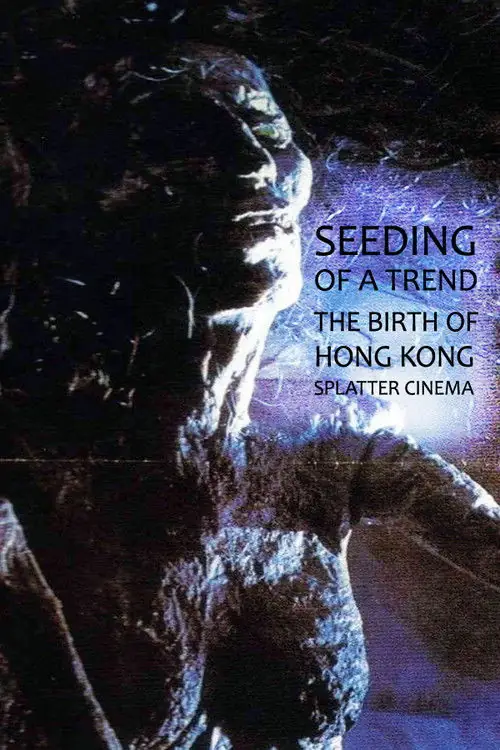
Hong Kong cinema's relationship with extreme on-screen violence has long fascinated scholars and…