
Till Human Voices Wake Us
Water has long served as cinema's most mutable metaphor — a medium of transformation, disappearance, and the…
152 min
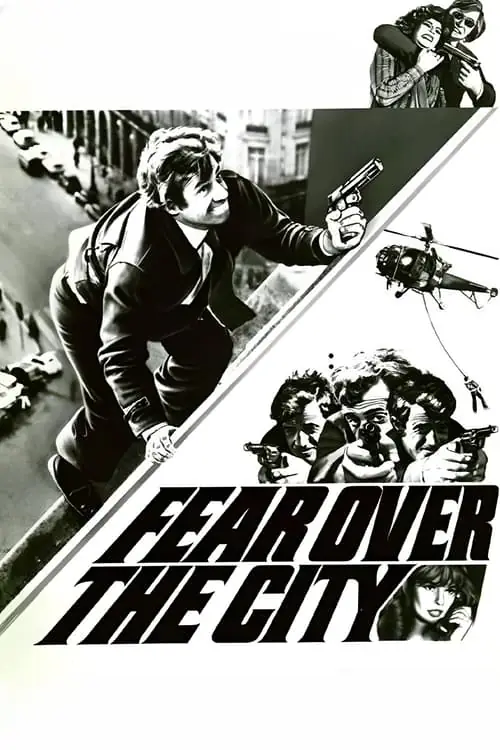
French cinema of the 1970s frequently marshaled the structures of the thriller to investigate the social and political anxieties roiling beneath the surface of metropolitan life, and this Paris-set procedural stands as a particularly ferocious example of the tendency. The premise — a serial murderer who telephones his victims before killing them, delivering diatribes about their lives and their perceived transgressions — immediately establishes a figure whose violence is ideological rather than merely pathological. Minos, as the killer styles himself, targets women whose autonomy he finds threatening, and his campaign of terror is explicitly framed as an assault on female liberation, a crusade against the emancipation that he perceives as corrosive to the social order he covets. The film's brilliance lies in its refusal to sensationalize its subject. The murders are depicted with a restraint that renders them more disturbing than any display of gore could achieve, and the phone calls — with their intimate, invasive cataloguing of personal details — generate a horror rooted in the violation of privacy rather than the spectacle of physical destruction. The director understands that true terror resides not in what is shown but in what is known, and the killer's articulate, almost reasonable-sounding misogyny carries a chilling plausibility that makes him far more frightening than any cinematic lunatic. Commissaire Letellier, the detective assigned to the case, embodies the institutional response to a threat that institutions are ill-equipped to address. His investigation proceeds through the established channels of police work — witness interviews, evidence analysis, stakeouts — but each procedural step reveals the limitations of institutional power when confronted with a crime whose motivations are cultural rather than personal. The killer is not motivated by revenge or greed or any of the legible drives that traditional detection is designed to penetrate; he is motivated by ideology, and the tools of law enforcement are blunt instruments against the sharp edge of conviction. The Paris through which the investigation moves is not the city of tourist imagination but a metropolis of concrete towers, dim corridors, and anonymous apartments where isolation breeds both vulnerability and violence. This architectural backdrop — modernist, impersonal, and subtly dehumanizing — becomes an implicit commentary on the conditions that produce both the killer and the society he terrorizes. The film suggests, with quietly devastating logic, that the same forces that alienate individuals from community also generate the rage that festers in that alienation's wake, and that the line between the murderous fanatic and the indifferent bureaucracy is thinner than comfortable narratives of law and order would admit.
French cinema of the 1970s frequently marshaled the structures of the thriller to investigate the social and political anxieties roiling beneath the surface of metropolitan life, and this Paris-set procedural stands as a particularly ferocious example of the tendency. The premise — a serial murderer who telephones his victims before killing them, delivering diatribes about their lives and their perceived transgressions — immediately establishes a figure whose violence is ideological rather than merely pathological. Minos, as the killer styles himself, targets women whose autonomy he finds threatening, and his campaign of terror is explicitly framed as an assault on female liberation, a crusade against the emancipation that he perceives as corrosive to the social order he covets. The film's brilliance lies in its refusal to sensationalize its subject. The murders are depicted with a restraint that renders them more disturbing than any display of gore could achieve, and the phone calls — with their intimate, invasive cataloguing of personal details — generate a horror rooted in the violation of privacy rather than the spectacle of physical destruction. The director understands that true terror resides not in what is shown but in what is known, and the killer's articulate, almost reasonable-sounding misogyny carries a chilling plausibility that makes him far more frightening than any cinematic lunatic. Commissaire Letellier, the detective assigned to the case, embodies the institutional response to a threat that institutions are ill-equipped to address. His investigation proceeds through the established channels of police work — witness interviews, evidence analysis, stakeouts — but each procedural step reveals the limitations of institutional power when confronted with a crime whose motivations are cultural rather than personal. The killer is not motivated by revenge or greed or any of the legible drives that traditional detection is designed to penetrate; he is motivated by ideology, and the tools of law enforcement are blunt instruments against the sharp edge of conviction. The Paris through which the investigation moves is not the city of tourist imagination but a metropolis of concrete towers, dim corridors, and anonymous apartments where isolation breeds both vulnerability and violence. This architectural backdrop — modernist, impersonal, and subtly dehumanizing — becomes an implicit commentary on the conditions that produce both the killer and the society he terrorizes. The film suggests, with quietly devastating logic, that the same forces that alienate individuals from community also generate the rage that festers in that alienation's wake, and that the line between the murderous fanatic and the indifferent bureaucracy is thinner than comfortable narratives of law and order would admit.
— Curator's log, recorded 1950±25 BCE
Water has long served as cinema's most mutable metaphor — a medium of transformation, disappearance, and the…

Operating in a register of unbridled creative excess, this audacious genre hybrid reimagines Shakespearean…

Constantin Brâncuși stands as one of the towering figures of modern sculpture, an artist who stripped form…

The American frontier of the 1850s serves as the punishing backdrop for this morally intricate western-horror…