
Where Danger Lives: White Rose for Julie
Film noir occupies a peculiar position in the American cinematic imagination — a genre defined as much by its…
130 min
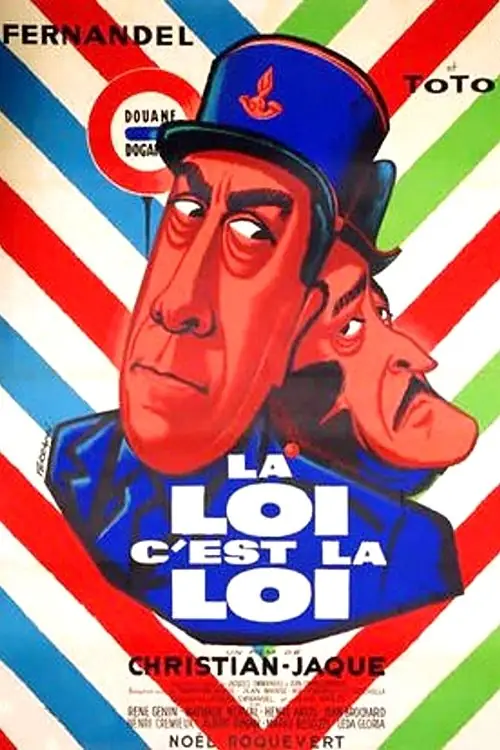
Nestled along an improbable frontier where two nations collide, the fictional hamlet of Assola becomes a playground for absurdist geopolitical comedy. The village itself is bisected by the Franco-Italian boundary, rendering everyday life an exercise in bureaucratic surrealism — a cart rolled across the street becomes an international incident, a café patron may sip espresso in one country while his feet rest in another. At the center of this topsy-turvy arrangement stands Ferdinand, a French customs officer whose self-righteous dedication to enforcing tariff law is matched only by his comic obliviousness. His eternal nemesis is Giuseppe, a wily Italian smuggler whose talent for slipping contraband past the border seems almost artistic in its ingenuity. The cat-and-mouse dynamic between these two adversaries propels the narrative forward through a series of escalating set pieces that blend slapstick physicality with pointed satire. The film's brilliance lies in how it transforms the arbitrary nature of national boundaries into a metaphor for identity itself. When Giuseppe stumbles upon the devastating revelation that Ferdinand was, in fact, born on the Italian side of the divide, the entire edifice of the customs officer's authority crumbles with delicious irony. Suddenly the man who has devoted his career to policing the border has no legitimate claim to the uniform he wears. What follows is a cascading unraveling of bureaucratic certainties, as Ferdinand's crisis of legitimacy forces every character — and the audience — to confront the absurdity of drawing lines across human communities. Directorial choices emphasize the claustrophobic intimacy of a settlement where geopolitical abstractions become inescapably personal. The cinematography frames the border markers as both physical obstacles and punchlines, while the performances revel in the kind of exaggerated earnestness that makes farce feel genuinely philosophical. Beneath the raucous humor pulses a serious interrogation of patriotism, belonging, and the fiction of the nation-state. The film ultimately argues that the most profound borders are those we carry inside ourselves, and that the most potent comedy emerges when those internal walls are exposed as the arbitrary constructions they truly are.
Nestled along an improbable frontier where two nations collide, the fictional hamlet of Assola becomes a playground for absurdist geopolitical comedy. The village itself is bisected by the Franco-Italian boundary, rendering everyday life an exercise in bureaucratic surrealism — a cart rolled across the street becomes an international incident, a café patron may sip espresso in one country while his feet rest in another. At the center of this topsy-turvy arrangement stands Ferdinand, a French customs officer whose self-righteous dedication to enforcing tariff law is matched only by his comic obliviousness. His eternal nemesis is Giuseppe, a wily Italian smuggler whose talent for slipping contraband past the border seems almost artistic in its ingenuity. The cat-and-mouse dynamic between these two adversaries propels the narrative forward through a series of escalating set pieces that blend slapstick physicality with pointed satire. The film's brilliance lies in how it transforms the arbitrary nature of national boundaries into a metaphor for identity itself. When Giuseppe stumbles upon the devastating revelation that Ferdinand was, in fact, born on the Italian side of the divide, the entire edifice of the customs officer's authority crumbles with delicious irony. Suddenly the man who has devoted his career to policing the border has no legitimate claim to the uniform he wears. What follows is a cascading unraveling of bureaucratic certainties, as Ferdinand's crisis of legitimacy forces every character — and the audience — to confront the absurdity of drawing lines across human communities. Directorial choices emphasize the claustrophobic intimacy of a settlement where geopolitical abstractions become inescapably personal. The cinematography frames the border markers as both physical obstacles and punchlines, while the performances revel in the kind of exaggerated earnestness that makes farce feel genuinely philosophical. Beneath the raucous humor pulses a serious interrogation of patriotism, belonging, and the fiction of the nation-state. The film ultimately argues that the most profound borders are those we carry inside ourselves, and that the most potent comedy emerges when those internal walls are exposed as the arbitrary constructions they truly are.
— Curator's log, recorded 1958±25 BCE
Film noir occupies a peculiar position in the American cinematic imagination — a genre defined as much by its…

Murder mystery and improvisational comedy collide in this holiday-themed whodunit that transforms the most…
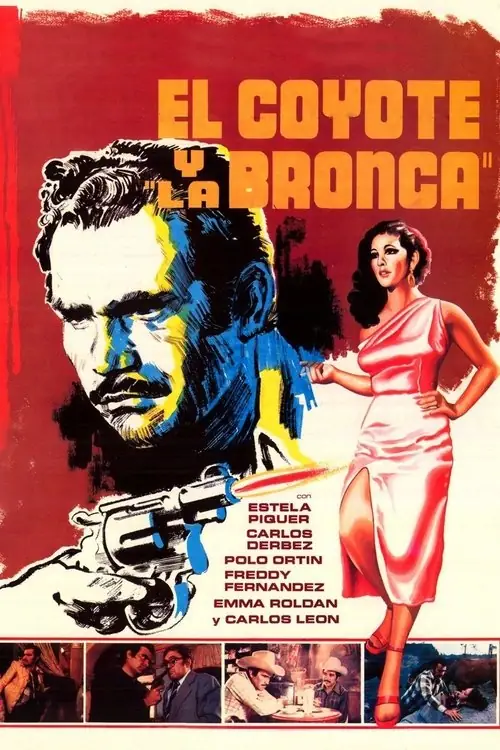
The Mexican crime thriller has undergone a remarkable evolution in recent decades, moving beyond narco…

The bachelor party has been a fixture of wedding-adjacent cinema for decades, typically serving as a ritual…