
The Law Is the Law
Nestled along an improbable frontier where two nations collide, the fictional hamlet of Assola becomes a…
132 min
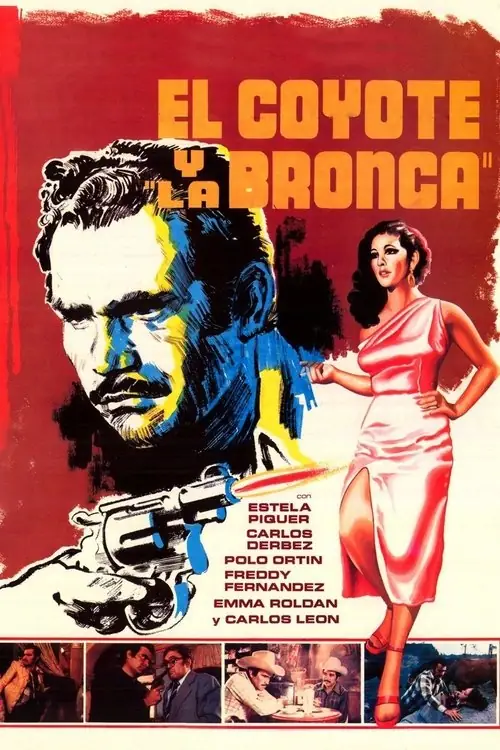
The Mexican crime thriller has undergone a remarkable evolution in recent decades, moving beyond narco spectacle toward more nuanced explorations of how violence reshapes intimate relationships. This film contributes to that tradition by centering two characters who have been defined — and confined — by their roles within a criminal economy: Juan, known as El Coyote, and Trinidad, called La Bronca, whose respective nicknames encode the predatory bravado expected of men and the fierce resistance cultivated by women in a world that treats them as commodities. A single act of murder catalyzes their escape from the only life either has known, propelling them into a reluctant partnership that must survive not only external pursuit but the far more daunting challenge of genuine emotional vulnerability. The early passages establish the brutal efficiency of the world Juan and Trinidad are fleeing. Prostitution, petty crime, and the casual mathematics of debt and favor circumscribe every interaction. The cinematography adopts a docu-realist register — handheld cameras, available light, performances of unshowy authenticity — that renders this milieu with unsparing clarity while refusing the voyeuristic gloss that afflicts so many depictions of Latin American poverty. When the murder occurs, it arrives with a suddenness that matches the characters' own shocked disorientation, and the ensuing flight carries a desperate momentum that the editing sustains through breathless cross-cutting and location work of startling physicality. As the journey progresses, the film's focus gradually shifts from the mechanics of evasion to the more perilous terrain of emotional honesty. Juan must unlearn the emotional shutdown that his criminal identity demanded; Trinidad must relinquish the defensive hostility that kept her alive but isolated. Their evolution from co-conspirators into something resembling an authentic couple unfolds in small, hard-won increments — a shared meal eaten in silence that gradually thaws, a moment of physical proximity that carries neither threat nor transaction, a confession spoken into the darkness of an anonymous room. The film's greatest achievement lies in its refusal to sentimentalize this transformation. Becoming a real couple, the narrative insists, is not a magical cure but a grueling process of unlearning the survival strategies that once served them. The final images carry an ambiguity that honors the difficulty of what these characters have attempted: freedom, the film suggests, is not the absence of danger but the presence of choice — however limited, however precarious.
The Mexican crime thriller has undergone a remarkable evolution in recent decades, moving beyond narco spectacle toward more nuanced explorations of how violence reshapes intimate relationships. This film contributes to that tradition by centering two characters who have been defined — and confined — by their roles within a criminal economy: Juan, known as El Coyote, and Trinidad, called La Bronca, whose respective nicknames encode the predatory bravado expected of men and the fierce resistance cultivated by women in a world that treats them as commodities. A single act of murder catalyzes their escape from the only life either has known, propelling them into a reluctant partnership that must survive not only external pursuit but the far more daunting challenge of genuine emotional vulnerability. The early passages establish the brutal efficiency of the world Juan and Trinidad are fleeing. Prostitution, petty crime, and the casual mathematics of debt and favor circumscribe every interaction. The cinematography adopts a docu-realist register — handheld cameras, available light, performances of unshowy authenticity — that renders this milieu with unsparing clarity while refusing the voyeuristic gloss that afflicts so many depictions of Latin American poverty. When the murder occurs, it arrives with a suddenness that matches the characters' own shocked disorientation, and the ensuing flight carries a desperate momentum that the editing sustains through breathless cross-cutting and location work of startling physicality. As the journey progresses, the film's focus gradually shifts from the mechanics of evasion to the more perilous terrain of emotional honesty. Juan must unlearn the emotional shutdown that his criminal identity demanded; Trinidad must relinquish the defensive hostility that kept her alive but isolated. Their evolution from co-conspirators into something resembling an authentic couple unfolds in small, hard-won increments — a shared meal eaten in silence that gradually thaws, a moment of physical proximity that carries neither threat nor transaction, a confession spoken into the darkness of an anonymous room. The film's greatest achievement lies in its refusal to sentimentalize this transformation. Becoming a real couple, the narrative insists, is not a magical cure but a grueling process of unlearning the survival strategies that once served them. The final images carry an ambiguity that honors the difficulty of what these characters have attempted: freedom, the film suggests, is not the absence of danger but the presence of choice — however limited, however precarious.
— Curator's log, recorded 1974±25 BCE
Nestled along an improbable frontier where two nations collide, the fictional hamlet of Assola becomes a…

Film noir occupies a peculiar position in the American cinematic imagination — a genre defined as much by its…

Murder mystery and improvisational comedy collide in this holiday-themed whodunit that transforms the most…

The bachelor party has been a fixture of wedding-adjacent cinema for decades, typically serving as a ritual…