
Till Human Voices Wake Us
Water has long served as cinema's most mutable metaphor — a medium of transformation, disappearance, and the…
152 min
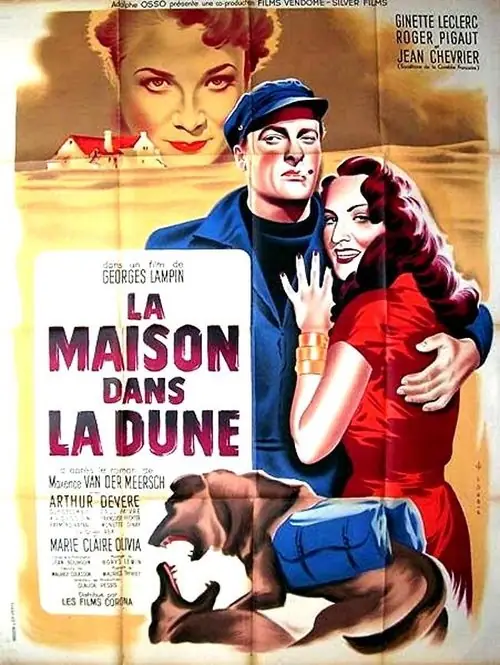
Set against the fog-draped borderlands between Belgium and France, this atmospheric romantic drama weaves a tangled web of desire, duty, and moral compromise around the perilous trade of tobacco smuggling. At its center stands a formidable customs officer whose rigid professional code begins to fracture when he encounters the world-weary former bar hostess who shares her life with the very smuggler he has vowed to apprehend. The film excels in mapping the treacherous interior landscape of a man who has always understood the world in clear binaries—lawbreaker and law-enforcer, right and wrong—only to discover that the heart operates by an altogether different cartography. The smuggler himself, a restless young man operating in the gray zones of the coastal economy, finds his own emotional certainties destabilized when he becomes drawn to a woman of markedly different temperament—a soul seemingly untouched by the cynicism that the border region breeds in its inhabitants. This parallel seduction, the officer falling for the experienced woman and the smuggler gravitating toward innocence, creates a mirror structure that the director exploits with considerable finesse, allowing each relationship to comment upon and complicate the other. The house on the dune of the title functions as both literal setting and symbolic architecture—a liminal space perched between land and sea, legality and transgression, the known and the unknowable. The cinematography makes masterful use of this location, capturing the shifting light of the coastal environment in ways that externalize the characters' inner turmoil. Scenes of wind-scoured beaches and rain-litten windows become visual metaphors for the erosion of certainty. What distinguishes the film from typical romantic melodrama is its refusal to render any character as simply sympathetic or villainous. The customs officer's pursuit is as driven by obsession as by justice; the smuggler's defiance carries equal measures of bravado and desperation; the women navigate their constrained circumstances with a pragmatism that the men, for all their assertiveness, can scarcely comprehend. The result is a portrait of four lives colliding at the margins of society, where every choice carries the weight of irreversible consequence.
Set against the fog-draped borderlands between Belgium and France, this atmospheric romantic drama weaves a tangled web of desire, duty, and moral compromise around the perilous trade of tobacco smuggling. At its center stands a formidable customs officer whose rigid professional code begins to fracture when he encounters the world-weary former bar hostess who shares her life with the very smuggler he has vowed to apprehend. The film excels in mapping the treacherous interior landscape of a man who has always understood the world in clear binaries—lawbreaker and law-enforcer, right and wrong—only to discover that the heart operates by an altogether different cartography. The smuggler himself, a restless young man operating in the gray zones of the coastal economy, finds his own emotional certainties destabilized when he becomes drawn to a woman of markedly different temperament—a soul seemingly untouched by the cynicism that the border region breeds in its inhabitants. This parallel seduction, the officer falling for the experienced woman and the smuggler gravitating toward innocence, creates a mirror structure that the director exploits with considerable finesse, allowing each relationship to comment upon and complicate the other. The house on the dune of the title functions as both literal setting and symbolic architecture—a liminal space perched between land and sea, legality and transgression, the known and the unknowable. The cinematography makes masterful use of this location, capturing the shifting light of the coastal environment in ways that externalize the characters' inner turmoil. Scenes of wind-scoured beaches and rain-litten windows become visual metaphors for the erosion of certainty. What distinguishes the film from typical romantic melodrama is its refusal to render any character as simply sympathetic or villainous. The customs officer's pursuit is as driven by obsession as by justice; the smuggler's defiance carries equal measures of bravado and desperation; the women navigate their constrained circumstances with a pragmatism that the men, for all their assertiveness, can scarcely comprehend. The result is a portrait of four lives colliding at the margins of society, where every choice carries the weight of irreversible consequence.
— Curator's log, recorded 1961±25 BCE
Water has long served as cinema's most mutable metaphor — a medium of transformation, disappearance, and the…

Operating in a register of unbridled creative excess, this audacious genre hybrid reimagines Shakespearean…

Constantin Brâncuși stands as one of the towering figures of modern sculpture, an artist who stripped form…

The American frontier of the 1850s serves as the punishing backdrop for this morally intricate western-horror…