
Em Nar, la ciudad de fuego
Cinema that emerges from regions underrepresented in global distribution networks carries a particular burden…
137 min
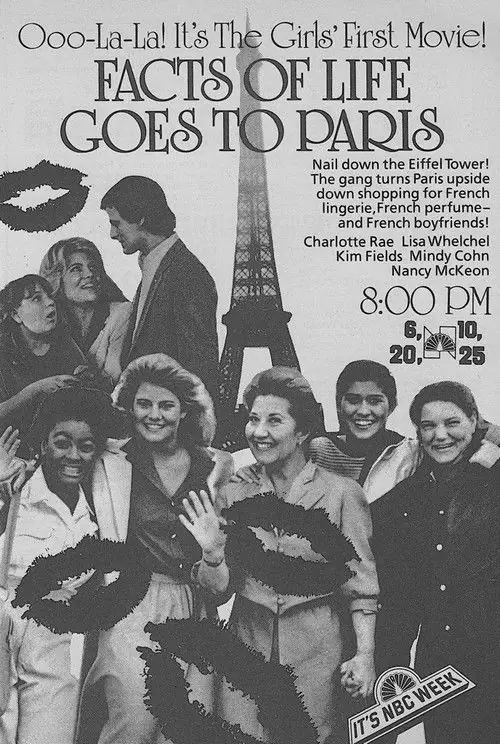
Television movies derived from beloved series occupy an awkward cultural position — too often they function as extended episodes with inflated budgets, satisfying nostalgia without justifying their existence as standalone works. This Paris-set excursion from the Facts of Life universe navigates those constraints with a lightness of touch that, while not transcending its televisual origins, nonetheless generates considerable charm through sheer commitment to its fish-out-of-water premise. The conceit of transplanting Mrs. Garrett and her charges from the familiar corridors of Eastland to the boulevards and ateliers of the French capital provides ample opportunity for both comedic culture clash and genuine moments of self-discovery. Mrs. Garrett's enrollment in a cooking class under the tutelage of a formidable French chef allows the narrative to explore themes of reinvention and the pursuit of passion in life's later chapters. Her determination to master an unfamiliar culinary tradition becomes a metaphor for the broader challenge of remaining open to experience when the comfort of routine beckons. The sequences in the kitchen are staged with an appreciation for the physicality of cooking — the heat, the pressure, the exhilarating chaos of a professional kitchen in full cry — that gives the storyline a texture beyond mere sitcom plotting. The girls' parallel adventures at the sister school introduce variations on familiar character dynamics reshaped by cultural displacement. The confidence that served them well at Eastland becomes a liability in a context where different social codes prevail, and the resulting friction generates both humor and unexpected moments of vulnerability. The film treats its young protagonists with a respect that acknowledges their growth across the series while remaining honest about the limitations of their experience. Their missteps in navigating French social life are played for laughs but never at their expense; the humor arises from recognition rather than ridicule. Paris itself is photographed with the affectionate gloss of a television production working with an unusually generous travel budget — the landmarks are present and correct, the cafes are impossibly picturesque, and the light has that particular golden quality that exists primarily in American imaginings of France. Yet this slightly idealized rendering serves the material well, creating a world where personal transformation feels not only possible but inevitable, as though the city itself exerts a catalytic influence on anyone willing to be changed by it.
Television movies derived from beloved series occupy an awkward cultural position — too often they function as extended episodes with inflated budgets, satisfying nostalgia without justifying their existence as standalone works. This Paris-set excursion from the Facts of Life universe navigates those constraints with a lightness of touch that, while not transcending its televisual origins, nonetheless generates considerable charm through sheer commitment to its fish-out-of-water premise. The conceit of transplanting Mrs. Garrett and her charges from the familiar corridors of Eastland to the boulevards and ateliers of the French capital provides ample opportunity for both comedic culture clash and genuine moments of self-discovery. Mrs. Garrett's enrollment in a cooking class under the tutelage of a formidable French chef allows the narrative to explore themes of reinvention and the pursuit of passion in life's later chapters. Her determination to master an unfamiliar culinary tradition becomes a metaphor for the broader challenge of remaining open to experience when the comfort of routine beckons. The sequences in the kitchen are staged with an appreciation for the physicality of cooking — the heat, the pressure, the exhilarating chaos of a professional kitchen in full cry — that gives the storyline a texture beyond mere sitcom plotting. The girls' parallel adventures at the sister school introduce variations on familiar character dynamics reshaped by cultural displacement. The confidence that served them well at Eastland becomes a liability in a context where different social codes prevail, and the resulting friction generates both humor and unexpected moments of vulnerability. The film treats its young protagonists with a respect that acknowledges their growth across the series while remaining honest about the limitations of their experience. Their missteps in navigating French social life are played for laughs but never at their expense; the humor arises from recognition rather than ridicule. Paris itself is photographed with the affectionate gloss of a television production working with an unusually generous travel budget — the landmarks are present and correct, the cafes are impossibly picturesque, and the light has that particular golden quality that exists primarily in American imaginings of France. Yet this slightly idealized rendering serves the material well, creating a world where personal transformation feels not only possible but inevitable, as though the city itself exerts a catalytic influence on anyone willing to be changed by it.
— Curator's log, recorded 1948±25 BCE
Cinema that emerges from regions underrepresented in global distribution networks carries a particular burden…

A delightful curio of postwar German comedy, this film emerges from the tradition of genial satire that…

A fascinating artifact of mid-century penal reform discourse rendered as popular entertainment, this film…

Smoldering beneath the rigid formalities of military life in 1969 South Korea, this film ignites a forbidden…