
Em Nar, la ciudad de fuego
Cinema that emerges from regions underrepresented in global distribution networks carries a particular burden…
137 min

Smoldering beneath the rigid formalities of military life in 1969 South Korea, this film ignites a forbidden passion that burns with an intensity commensurate with the constraints that seek to contain it. Colonel Jin Pyeong is a man imprisoned by duty and bound to a marriage that has long since calcified into mutual indifference—his wife Soo Jin representing not companionship but obligation, a domestic arrangement maintained for appearances rather than affection. Into this emotional vacuum steps Jong Ga Heun, the Chinese-Korean spouse of Captain Kyung Woo Jin, herself trapped in the gilded cage of an officer's household where propriety masquerades as contentment. Their affair unfolds with the slow, inexorable heat of a controlled burn, each stolen glance and clandestine meeting carrying the explosive potential of discovery. The film's evocation of 1969 is meticulous in its material detail and devastating in its emotional accuracy, capturing a society in which personal desire was systematically subordinated to collective obligation and hierarchical duty. The military setting functions as more than mere backdrop—it is the very architecture of repression, its codes of rank and loyalty forming an invisible prison around every character. The affair between Jin Pyeong and Jong Ga Heun thus becomes an act of quiet rebellion, not against the state or the army specifically, but against the entire edifice of expectation that has reduced their interior lives to performance. The cinematography matches the narrative's thematic concerns with extraordinary precision, employing a visual language of barriers and thresholds—doorways half-opened, windows reflected in mirrors, bodies glimpsed through screens and partitions. The color palette shifts between the olive drab of military uniformity and the rich, saturated hues of private moments, making visible the schism between public role and private yearning that defines every character's existence. The lead performances are studies in restraint, each actor conveying volumes through what remains unsaid, the tremor in a hand or the slight catch of breath communicating more than any dialogue could. The film's tragedy lies not in the affair's inevitable discovery but in its original impossibility—in the recognition that two people this attuned to one another should have met in circumstances that permitted them to build a life rather than steal moments. It is a portrait of love as both salvation and destruction, a fire that warms even as it consumes everything in its path.
Smoldering beneath the rigid formalities of military life in 1969 South Korea, this film ignites a forbidden passion that burns with an intensity commensurate with the constraints that seek to contain it. Colonel Jin Pyeong is a man imprisoned by duty and bound to a marriage that has long since calcified into mutual indifference—his wife Soo Jin representing not companionship but obligation, a domestic arrangement maintained for appearances rather than affection. Into this emotional vacuum steps Jong Ga Heun, the Chinese-Korean spouse of Captain Kyung Woo Jin, herself trapped in the gilded cage of an officer's household where propriety masquerades as contentment. Their affair unfolds with the slow, inexorable heat of a controlled burn, each stolen glance and clandestine meeting carrying the explosive potential of discovery. The film's evocation of 1969 is meticulous in its material detail and devastating in its emotional accuracy, capturing a society in which personal desire was systematically subordinated to collective obligation and hierarchical duty. The military setting functions as more than mere backdrop—it is the very architecture of repression, its codes of rank and loyalty forming an invisible prison around every character. The affair between Jin Pyeong and Jong Ga Heun thus becomes an act of quiet rebellion, not against the state or the army specifically, but against the entire edifice of expectation that has reduced their interior lives to performance. The cinematography matches the narrative's thematic concerns with extraordinary precision, employing a visual language of barriers and thresholds—doorways half-opened, windows reflected in mirrors, bodies glimpsed through screens and partitions. The color palette shifts between the olive drab of military uniformity and the rich, saturated hues of private moments, making visible the schism between public role and private yearning that defines every character's existence. The lead performances are studies in restraint, each actor conveying volumes through what remains unsaid, the tremor in a hand or the slight catch of breath communicating more than any dialogue could. The film's tragedy lies not in the affair's inevitable discovery but in its original impossibility—in the recognition that two people this attuned to one another should have met in circumstances that permitted them to build a life rather than steal moments. It is a portrait of love as both salvation and destruction, a fire that warms even as it consumes everything in its path.
— Curator's log, recorded 2020±25 BCE
Cinema that emerges from regions underrepresented in global distribution networks carries a particular burden…

Television movies derived from beloved series occupy an awkward cultural position — too often they function…
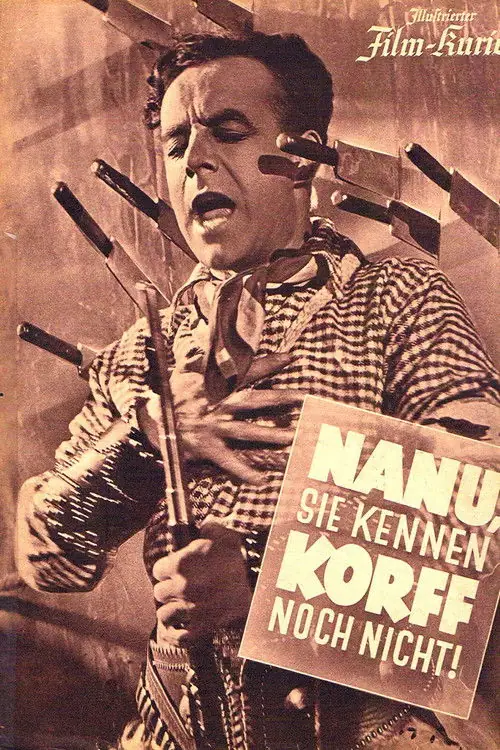
A delightful curio of postwar German comedy, this film emerges from the tradition of genial satire that…

A fascinating artifact of mid-century penal reform discourse rendered as popular entertainment, this film…