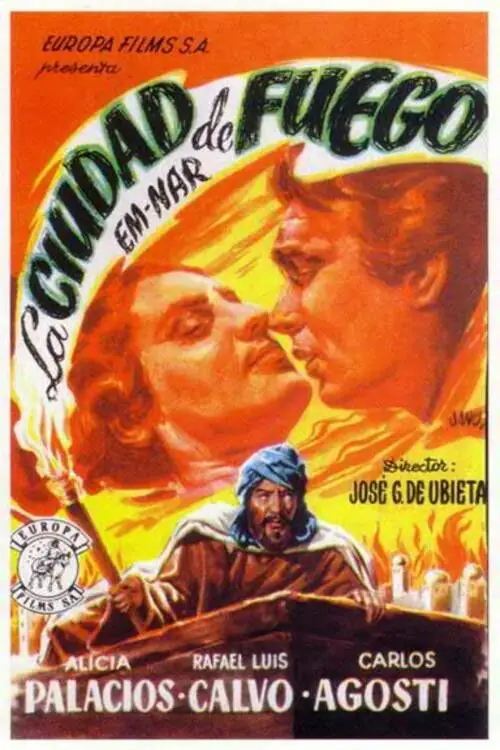
Em Nar, la ciudad de fuego
Cinema that emerges from regions underrepresented in global distribution networks carries a particular burden…
137 min
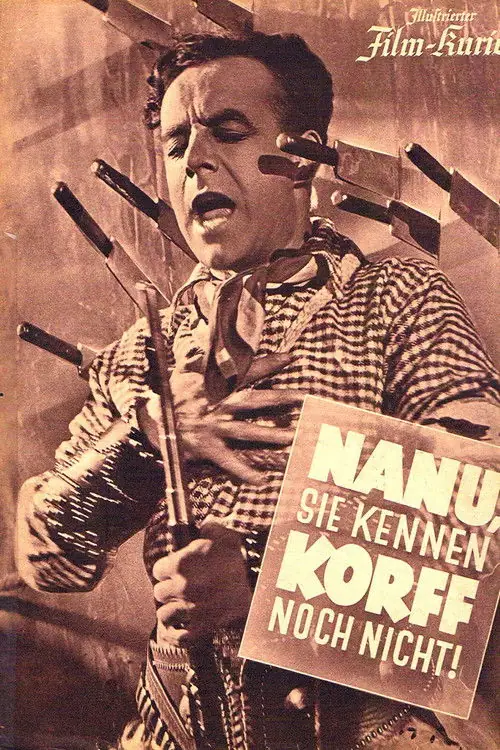
A delightful curio of postwar German comedy, this film emerges from the tradition of genial satire that flourished in the nation's cinema during the economic miracle years, offering a portrait of bourgeois absurdity wrapped in the accessible pleasures of popular entertainment. The title's colloquial exclamation—roughly rendered as "What, you haven't met Korff yet?"—functions as both a social mandate and a comic premise, positioning its titular character as a figure of such outsized reputation that ignorance of his existence constitutes a failing of civic awareness. The humor arises from the inevitable gap between the legend and the man, a disparity the filmmakers mine with affectionate precision. Korff himself embodies a particular German archetype: the self-made dynamo whose manic energy and relentless self-promotion have elevated him to the status of local institution. The performance walks a razor-thin line between satire and sympathy, ensuring that the character never devolves into mere caricature even as his pretensions are systematically punctured. The surrounding ensemble, representing various strata of provincial society, orbit around Korff with a mixture of exasperation and grudging admiration that captures the ambivalence such figures invariably provoke. The direction displays an assured command of comedic timing and spatial choreography, favoring the kind of flowing, long-take staging that allows jokes to build organically within the frame rather than relying on editorial punctuation. Interiors are dressed with the meticulous attention to period detail that distinguishes the best German production design of the era, each set functioning as a miniature index of social aspiration and material aspiration. The black-and-white cinematography makes expressive use of chiaroscuro, lending even the most farcical sequences a visual elegance that elevates them above mere slapstick. Beneath its buoyant surface, the film offers a sly commentary on the performative dimensions of success in a society rebuilding itself from ruin—where reputation is currency and visibility is power, being known becomes its own form of capital. Korff's relentless visibility, the film gently suggests, is less a sign of genuine achievement than a strategy for survival in a culture that measures worth by public recognition.
A delightful curio of postwar German comedy, this film emerges from the tradition of genial satire that flourished in the nation's cinema during the economic miracle years, offering a portrait of bourgeois absurdity wrapped in the accessible pleasures of popular entertainment. The title's colloquial exclamation—roughly rendered as "What, you haven't met Korff yet?"—functions as both a social mandate and a comic premise, positioning its titular character as a figure of such outsized reputation that ignorance of his existence constitutes a failing of civic awareness. The humor arises from the inevitable gap between the legend and the man, a disparity the filmmakers mine with affectionate precision. Korff himself embodies a particular German archetype: the self-made dynamo whose manic energy and relentless self-promotion have elevated him to the status of local institution. The performance walks a razor-thin line between satire and sympathy, ensuring that the character never devolves into mere caricature even as his pretensions are systematically punctured. The surrounding ensemble, representing various strata of provincial society, orbit around Korff with a mixture of exasperation and grudging admiration that captures the ambivalence such figures invariably provoke. The direction displays an assured command of comedic timing and spatial choreography, favoring the kind of flowing, long-take staging that allows jokes to build organically within the frame rather than relying on editorial punctuation. Interiors are dressed with the meticulous attention to period detail that distinguishes the best German production design of the era, each set functioning as a miniature index of social aspiration and material aspiration. The black-and-white cinematography makes expressive use of chiaroscuro, lending even the most farcical sequences a visual elegance that elevates them above mere slapstick. Beneath its buoyant surface, the film offers a sly commentary on the performative dimensions of success in a society rebuilding itself from ruin—where reputation is currency and visibility is power, being known becomes its own form of capital. Korff's relentless visibility, the film gently suggests, is less a sign of genuine achievement than a strategy for survival in a culture that measures worth by public recognition.
— Curator's log, recorded 1944±25 BCE
Cinema that emerges from regions underrepresented in global distribution networks carries a particular burden…

Television movies derived from beloved series occupy an awkward cultural position — too often they function…

A fascinating artifact of mid-century penal reform discourse rendered as popular entertainment, this film…

Smoldering beneath the rigid formalities of military life in 1969 South Korea, this film ignites a forbidden…