
Till Human Voices Wake Us
Water has long served as cinema's most mutable metaphor — a medium of transformation, disappearance, and the…
152 min
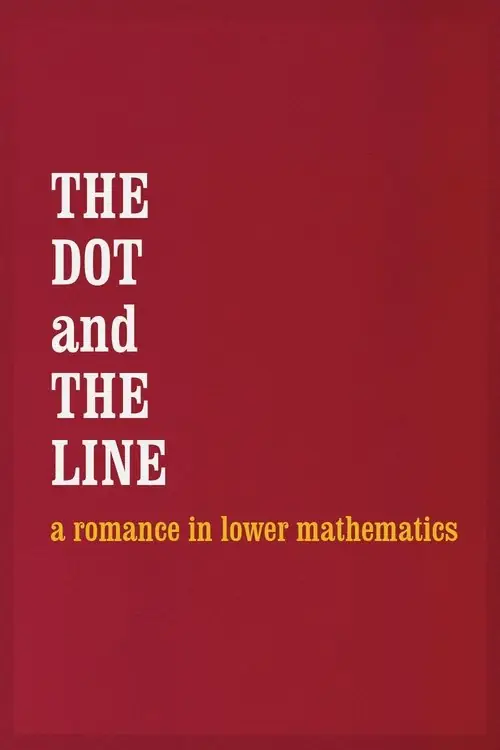
Chuck Jones's animated masterpiece, adapted from Norton Juster's slender but ingeniously conceived book, transforms a mathematical conceit into a genuinely moving meditation on geometry, longing, and the transformative power of self-improvement. The premise is almost absurdly reductive in the best sense: a straight line loves a dot, but the dot prefers a squiggle—a chaotic, improvisational figure whose curves and convolutions represent everything the line is not. The line's anguish at this rejection is rendered with the same precision that Jones brought to his Looney Tunes work, but here the comedy carries a philosophical weight that elevates the material far beyond novelty. The brilliance of the conceit lies in its metaphorical elasticity. On one level, it functions as a parable about romantic competition—the steady, reliable suitor spurned in favor of the exciting, unpredictable rival. On another, it operates as a commentary on the rigidity of conformity versus the appeal of creative freedom. The squiggle's appeal is not merely aesthetic but ideological: it represents a way of being in the world that refuses constraint, that occupies space with joyous disregard for boundaries. The line, by contrast, is defined by its discipline—its commitment to a single direction, its refusal to deviate, its essential honesty about what it is. What makes the film transcendent is the line's response to heartbreak. Rather than succumbing to despair or attempting to become something he is not, the line applies himself to growth on his own terms. He learns to form angles, to create shapes, to harness his essential nature toward complexity and beauty. When he ultimately wins the dot's affection, it is not by abandoning his identity but by realizing its full potential—a resolution that functions as both romantic payoff and aesthetic argument. The narration, delivered with wry intelligence, treats the characters' emotional lives with a seriousness that honors the metaphorical stakes. The animation style, clean and geometric, embodies its subject matter in visual form. The result is a film that makes the abstract tangible and finds in the simplest of forms—a line, a dot, a squiggle—the entire drama of desire, rejection, and the possibility of becoming worthy of love through disciplined self-transformation.
Chuck Jones's animated masterpiece, adapted from Norton Juster's slender but ingeniously conceived book, transforms a mathematical conceit into a genuinely moving meditation on geometry, longing, and the transformative power of self-improvement. The premise is almost absurdly reductive in the best sense: a straight line loves a dot, but the dot prefers a squiggle—a chaotic, improvisational figure whose curves and convolutions represent everything the line is not. The line's anguish at this rejection is rendered with the same precision that Jones brought to his Looney Tunes work, but here the comedy carries a philosophical weight that elevates the material far beyond novelty. The brilliance of the conceit lies in its metaphorical elasticity. On one level, it functions as a parable about romantic competition—the steady, reliable suitor spurned in favor of the exciting, unpredictable rival. On another, it operates as a commentary on the rigidity of conformity versus the appeal of creative freedom. The squiggle's appeal is not merely aesthetic but ideological: it represents a way of being in the world that refuses constraint, that occupies space with joyous disregard for boundaries. The line, by contrast, is defined by its discipline—its commitment to a single direction, its refusal to deviate, its essential honesty about what it is. What makes the film transcendent is the line's response to heartbreak. Rather than succumbing to despair or attempting to become something he is not, the line applies himself to growth on his own terms. He learns to form angles, to create shapes, to harness his essential nature toward complexity and beauty. When he ultimately wins the dot's affection, it is not by abandoning his identity but by realizing its full potential—a resolution that functions as both romantic payoff and aesthetic argument. The narration, delivered with wry intelligence, treats the characters' emotional lives with a seriousness that honors the metaphorical stakes. The animation style, clean and geometric, embodies its subject matter in visual form. The result is a film that makes the abstract tangible and finds in the simplest of forms—a line, a dot, a squiggle—the entire drama of desire, rejection, and the possibility of becoming worthy of love through disciplined self-transformation.
— Curator's log, recorded 1975±25 BCE
Water has long served as cinema's most mutable metaphor — a medium of transformation, disappearance, and the…

Operating in a register of unbridled creative excess, this audacious genre hybrid reimagines Shakespearean…

Constantin Brâncuși stands as one of the towering figures of modern sculpture, an artist who stripped form…

The American frontier of the 1850s serves as the punishing backdrop for this morally intricate western-horror…