
The Law Is the Law
Nestled along an improbable frontier where two nations collide, the fictional hamlet of Assola becomes a…
132 min
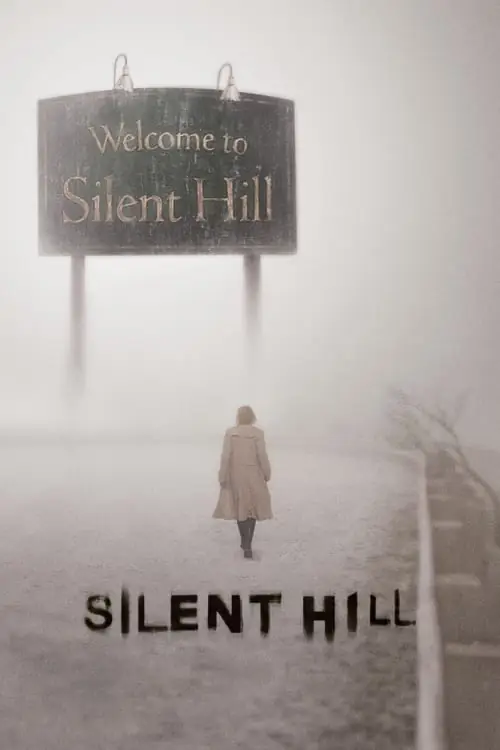
A landmark of video game adaptation that transcends its source material to become a standalone work of harrowing visionary power, this film plunges its audience into a nightmare landscape where the boundaries between psychological horror and supernatural terror dissolve completely. Rose, a mother driven to desperate measures by her adopted daughter Sharon's inexplicable afflictions, steers toward the abandoned town of Silent Hill—a place whose very name has become synonymous with unspeakable catastrophe. A violent automobile accident severs Rose from Sharon, initiating a descent into a purgatorial realm that operates according to a logic of punishment, revelation, and cyclical damnation borrowed from the most terrifying chapters of religious eschatology. The film's visual imagination is its most staggering achievement. Director Christophe Gans and his production team conjure a reality that oscillates between two distinct registers: the fog-shrouded, ash-falling wasteland of the town's superficial layer, and the rust-encrusted, blood-drenched alternate dimension that periodically descends like a curtain of industrial horror. This architectural duality—the decaying ordinary giving way to the grotesquely transformed—creates a spatial metaphor for repressed trauma erupting through the surface of everyday life. The creature designs, rendered with a combination of practical effects and digital enhancement, are genuinely nightmarish, occupying that uncanny territory where the human form is distorted just enough to trigger primal revulsion. Narratively, the film operates as an excavation of buried history—both personal and communal. As Rose penetrates deeper into Silent Hill's labyrinthine geography, she unspools the thread of a catastrophe that consumed the town three decades earlier, a conflagration born from the lethal intersection of religious fanaticism and collective guilt. The screenplay draws on a rich tradition of American Gothic, from Hawthorne's paranoid communities to Shirley Jackson's accusatory villages, to construct a portrait of a society that destroyed itself in the very act of purifying itself. The performance at the film's emotional center is one of ferocious maternal commitment—Rose's journey through hell is motivated not by curiosity or heroism but by the primal imperative to recover her child, lending the horror an emotional stakes that elevate it above mere spectacle. The film argues that hell is not a place one visits but a condition one enters through love, and that the only force capable of navigating its terrors is the same force that makes them unbearable.
A landmark of video game adaptation that transcends its source material to become a standalone work of harrowing visionary power, this film plunges its audience into a nightmare landscape where the boundaries between psychological horror and supernatural terror dissolve completely. Rose, a mother driven to desperate measures by her adopted daughter Sharon's inexplicable afflictions, steers toward the abandoned town of Silent Hill—a place whose very name has become synonymous with unspeakable catastrophe. A violent automobile accident severs Rose from Sharon, initiating a descent into a purgatorial realm that operates according to a logic of punishment, revelation, and cyclical damnation borrowed from the most terrifying chapters of religious eschatology. The film's visual imagination is its most staggering achievement. Director Christophe Gans and his production team conjure a reality that oscillates between two distinct registers: the fog-shrouded, ash-falling wasteland of the town's superficial layer, and the rust-encrusted, blood-drenched alternate dimension that periodically descends like a curtain of industrial horror. This architectural duality—the decaying ordinary giving way to the grotesquely transformed—creates a spatial metaphor for repressed trauma erupting through the surface of everyday life. The creature designs, rendered with a combination of practical effects and digital enhancement, are genuinely nightmarish, occupying that uncanny territory where the human form is distorted just enough to trigger primal revulsion. Narratively, the film operates as an excavation of buried history—both personal and communal. As Rose penetrates deeper into Silent Hill's labyrinthine geography, she unspools the thread of a catastrophe that consumed the town three decades earlier, a conflagration born from the lethal intersection of religious fanaticism and collective guilt. The screenplay draws on a rich tradition of American Gothic, from Hawthorne's paranoid communities to Shirley Jackson's accusatory villages, to construct a portrait of a society that destroyed itself in the very act of purifying itself. The performance at the film's emotional center is one of ferocious maternal commitment—Rose's journey through hell is motivated not by curiosity or heroism but by the primal imperative to recover her child, lending the horror an emotional stakes that elevate it above mere spectacle. The film argues that hell is not a place one visits but a condition one enters through love, and that the only force capable of navigating its terrors is the same force that makes them unbearable.
— Curator's log, recorded 1965±25 BCE
Nestled along an improbable frontier where two nations collide, the fictional hamlet of Assola becomes a…

Film noir occupies a peculiar position in the American cinematic imagination — a genre defined as much by its…

Murder mystery and improvisational comedy collide in this holiday-themed whodunit that transforms the most…
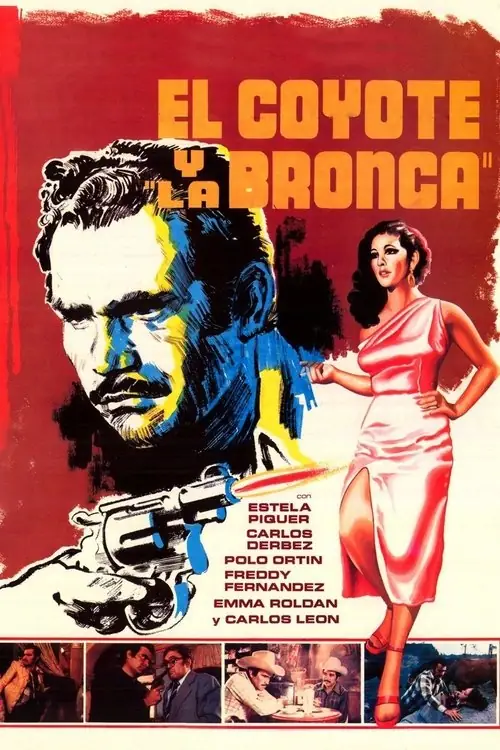
The Mexican crime thriller has undergone a remarkable evolution in recent decades, moving beyond narco…