
Em Nar, la ciudad de fuego
Cinema that emerges from regions underrepresented in global distribution networks carries a particular burden…
137 min

The Postables franchise continues its gentle exploration of lives transformed by the power of delivered messages, and this installment raises the emotional stakes considerably by splitting its narrative between a race against time in a war zone and a more intimate competition closer to home. The central mission involves decoding a letter that could facilitate the rescue of a soldier stationed in Afghanistan—a premise that lends the usual procedural pleasures of cryptographic investigation an urgency rooted in genuine mortal peril. Every delay carries consequences measured not in missed deadlines but in continued exposure to danger, and the film communicates this weight without tipping into exploitation or melodrama. The parallel storyline follows Rita as she vies for the national Miss Special Delivery title in Washington, D.C. On its surface, this competition might seem inconsequential beside the Afghanistan narrative, but the film draws an unexpected resonance between the two plots. Rita's pursuit of recognition is framed as an act of self-definition—a woman staking claim to competence and visibility in a field that often reduces its professionals to bureaucratic functionaries. Her preparation, her anxiety, and her determination mirror the soldier's own struggle to maintain identity and purpose in circumstances that threaten to reduce her to a unit of military labor. The connection is emotional rather than narrative, but it gives the film a structural elegance that elevates both storylines. The performances maintain the sincerity that has become the series' hallmark, with particular credit to the ensemble's ability to convey the procedural mechanics of postal investigation with genuine enthusiasm. The decoding sequences are shot with an attention to tactile detail—the feel of paper, the weight of ink, the texture of handwriting—that makes the act of reading feel like an act of care. The Afghanistan material, handled with restraint, avoids the jingoistic register that often afflicts military-adjacent narratives, instead focusing on the soldier's humanity and the family awaiting her return. The result is a film that believes in the significance of small acts—of reading, of delivering, of competing, of hoping—and argues, with quiet conviction, that these acts are never small when they connect one human being to another across the distances that circumstance and geography impose.
The Postables franchise continues its gentle exploration of lives transformed by the power of delivered messages, and this installment raises the emotional stakes considerably by splitting its narrative between a race against time in a war zone and a more intimate competition closer to home. The central mission involves decoding a letter that could facilitate the rescue of a soldier stationed in Afghanistan—a premise that lends the usual procedural pleasures of cryptographic investigation an urgency rooted in genuine mortal peril. Every delay carries consequences measured not in missed deadlines but in continued exposure to danger, and the film communicates this weight without tipping into exploitation or melodrama. The parallel storyline follows Rita as she vies for the national Miss Special Delivery title in Washington, D.C. On its surface, this competition might seem inconsequential beside the Afghanistan narrative, but the film draws an unexpected resonance between the two plots. Rita's pursuit of recognition is framed as an act of self-definition—a woman staking claim to competence and visibility in a field that often reduces its professionals to bureaucratic functionaries. Her preparation, her anxiety, and her determination mirror the soldier's own struggle to maintain identity and purpose in circumstances that threaten to reduce her to a unit of military labor. The connection is emotional rather than narrative, but it gives the film a structural elegance that elevates both storylines. The performances maintain the sincerity that has become the series' hallmark, with particular credit to the ensemble's ability to convey the procedural mechanics of postal investigation with genuine enthusiasm. The decoding sequences are shot with an attention to tactile detail—the feel of paper, the weight of ink, the texture of handwriting—that makes the act of reading feel like an act of care. The Afghanistan material, handled with restraint, avoids the jingoistic register that often afflicts military-adjacent narratives, instead focusing on the soldier's humanity and the family awaiting her return. The result is a film that believes in the significance of small acts—of reading, of delivering, of competing, of hoping—and argues, with quiet conviction, that these acts are never small when they connect one human being to another across the distances that circumstance and geography impose.
— Curator's log, recorded 1968±25 BCE
Cinema that emerges from regions underrepresented in global distribution networks carries a particular burden…

Television movies derived from beloved series occupy an awkward cultural position — too often they function…
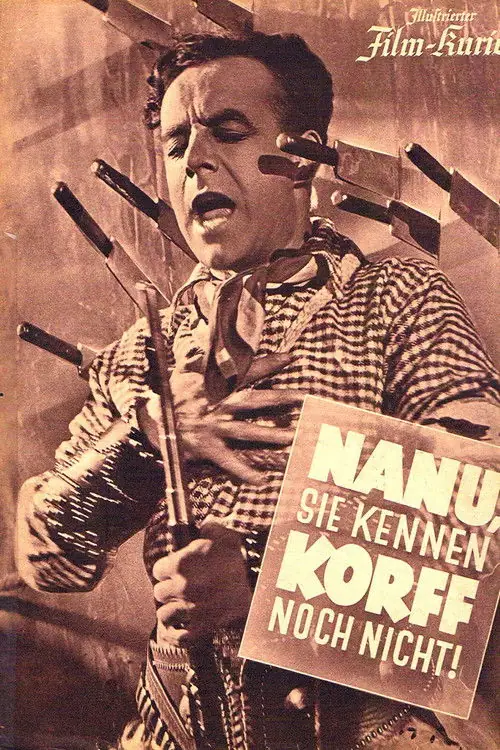
A delightful curio of postwar German comedy, this film emerges from the tradition of genial satire that…

A fascinating artifact of mid-century penal reform discourse rendered as popular entertainment, this film…