
Till Human Voices Wake Us
Water has long served as cinema's most mutable metaphor — a medium of transformation, disappearance, and the…
152 min
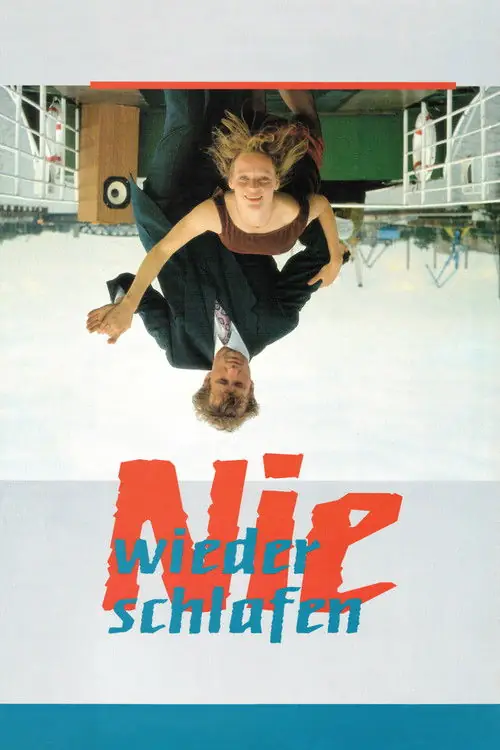
Capturing the peculiar disorientation of a historical moment through the microcosm of three stranded travelers, this film transforms a simple narrative of logistical misfortune into a haunting evocation of a nation caught between what it was and what it might become. The catalyst is deceptively ordinary: a wedding celebration aboard a steamboat cruising the river Spree, an occasion of conviviality that gives way to bewilderment when the vessel docks and the three Hamburg friends discover they have been marooned in a Berlin that bears only passing resemblance to the city they thought they knew. The year is unspecified but the atmosphere is unmistakably that of the early post-reunification period, when the formerly divided capital was a vast construction site of competing visions and unresolved histories. The odyssey that ensues is restless in the most literal sense—these are characters who cannot find a place to rest, who are perpetually in motion without ever arriving. The filmmakers stage this aimless wandering against backdrops of extraordinary visual poetry: half-demolished buildings revealing their interior lives like anatomical specimens, empty lots where the Wall once stood now colonized by weeds and uncertainty, streets that lead not to destinations but to further streets, each one marginally less recognizable than the last. The camera moves through these spaces with a documentary attentiveness that honors the material reality of a city in transition while simultaneously transforming it into something dreamlike and dislocating. The three friends represent different strategies for navigating this liminal terrain—one clings to humor, another to nostalgia, the third to a restless forward motion that might be hope or might simply be flight. Their interactions are shot through with the particular tension of people who know each other well enough to be honest but not well enough to be gentle, and the dialogue has the improvisatory texture of real conversation rather than scripted exchange. Berlin itself emerges as the film's true protagonist, a metropolis engaged in its own fraught process of self-invention, uncertain whether the future it is building will be a home or merely another ruin. The picture's power accumulates gradually, through small observations and accumulating impressions rather than dramatic peaks, until the viewer realizes they have been immersed in a portrait of historical consciousness as experienced from the ground level—messy, inconclusive, and profoundly human.
Capturing the peculiar disorientation of a historical moment through the microcosm of three stranded travelers, this film transforms a simple narrative of logistical misfortune into a haunting evocation of a nation caught between what it was and what it might become. The catalyst is deceptively ordinary: a wedding celebration aboard a steamboat cruising the river Spree, an occasion of conviviality that gives way to bewilderment when the vessel docks and the three Hamburg friends discover they have been marooned in a Berlin that bears only passing resemblance to the city they thought they knew. The year is unspecified but the atmosphere is unmistakably that of the early post-reunification period, when the formerly divided capital was a vast construction site of competing visions and unresolved histories. The odyssey that ensues is restless in the most literal sense—these are characters who cannot find a place to rest, who are perpetually in motion without ever arriving. The filmmakers stage this aimless wandering against backdrops of extraordinary visual poetry: half-demolished buildings revealing their interior lives like anatomical specimens, empty lots where the Wall once stood now colonized by weeds and uncertainty, streets that lead not to destinations but to further streets, each one marginally less recognizable than the last. The camera moves through these spaces with a documentary attentiveness that honors the material reality of a city in transition while simultaneously transforming it into something dreamlike and dislocating. The three friends represent different strategies for navigating this liminal terrain—one clings to humor, another to nostalgia, the third to a restless forward motion that might be hope or might simply be flight. Their interactions are shot through with the particular tension of people who know each other well enough to be honest but not well enough to be gentle, and the dialogue has the improvisatory texture of real conversation rather than scripted exchange. Berlin itself emerges as the film's true protagonist, a metropolis engaged in its own fraught process of self-invention, uncertain whether the future it is building will be a home or merely another ruin. The picture's power accumulates gradually, through small observations and accumulating impressions rather than dramatic peaks, until the viewer realizes they have been immersed in a portrait of historical consciousness as experienced from the ground level—messy, inconclusive, and profoundly human.
— Curator's log, recorded 1939±25 BCE
Water has long served as cinema's most mutable metaphor — a medium of transformation, disappearance, and the…

Operating in a register of unbridled creative excess, this audacious genre hybrid reimagines Shakespearean…

Constantin Brâncuși stands as one of the towering figures of modern sculpture, an artist who stripped form…

The American frontier of the 1850s serves as the punishing backdrop for this morally intricate western-horror…