
Till Human Voices Wake Us
Water has long served as cinema's most mutable metaphor — a medium of transformation, disappearance, and the…
152 min
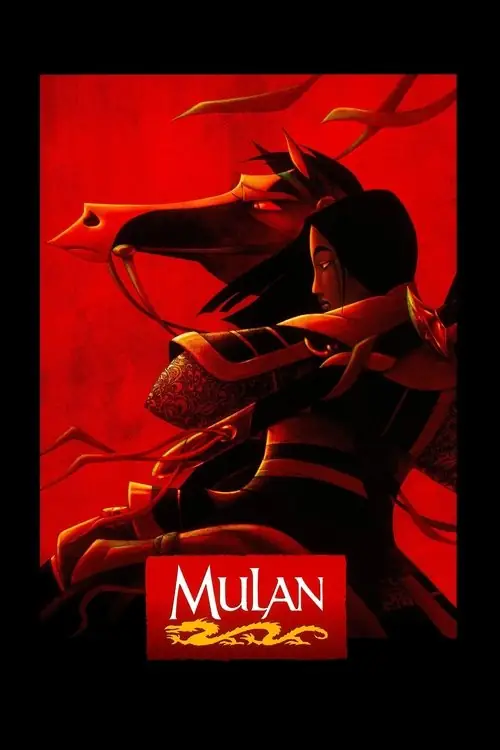
The legend of Hua Mulan has resonated through Chinese culture for over a millennium, a tale of filial devotion and martial valor that has been retold in ballads, operas, and novels across centuries. This animated adaptation transposes the ancient narrative into the visual grammar of the Hollywood musical epic, employing songs, comedy, and bravura action sequences to explore the explosive collision between individual identity and societal expectation. When the Emperor's conscription decree demands one man from every household, Mulan faces an impossible choice: allow her frail and aging father to march toward certain death, or violate the most fundamental laws of her society by assuming a male identity and taking his place. She chooses defiance, and in doing so transforms herself from a disappointment to her family into a threat to the entire social order she has been raised to revere. The film's treatment of gender is more sophisticated than its family-friendly surface might suggest. Mulan's disguise is not a mere plot contrivance but an existential experiment — an opportunity to discover who she might become when freed from the crushing weight of feminine expectation. The training montage, in which she must match her male comrades' strength and skill or face exposure, functions simultaneously as thrilling action cinema and as a commentary on the arbitrary nature of the competencies societies assign to each sex. Her gradual acceptance by the troops, earned through determination and ingenuity rather than brute force, proposes a model of heroism that challenges the martial orthodoxy of the culture she defends. Visually, the film represents a significant artistic achievement. Drawing inspiration from traditional Chinese painting, the production design employs sweeping landscapes rendered in delicate washes of color, compositional principles that emphasize negative space, and character designs that distill emotional expression to its most essential lines. The Hun invasion sequence, which deploys the film's most ambitious animation in the service of a genuinely terrifying avalanche, demonstrates how the medium's capacity for visual metaphor can elevate action beyond spectacle into the realm of myth. The musical numbers, while adhering to Broadway conventions, integrate Eastern musical idioms and lyrical themes that prevent the score from feeling merely imposed upon its source material. The villainous Shan Yu embodies not just physical menace but the terrifying indifference of an empire that regards conquest as a natural right. And Mulan's final confrontation — in which tactical intelligence triumphs over overwhelming force — delivers a cathartic payoff that honors both the folkloric tradition from which the story springs and the contemporary values it has been enlisted to serve. It remains one of the most thematically ambitious entries in the animated feature canon, a work that uses the freedoms of animation to interrogate the constraints of tradition.
The legend of Hua Mulan has resonated through Chinese culture for over a millennium, a tale of filial devotion and martial valor that has been retold in ballads, operas, and novels across centuries. This animated adaptation transposes the ancient narrative into the visual grammar of the Hollywood musical epic, employing songs, comedy, and bravura action sequences to explore the explosive collision between individual identity and societal expectation. When the Emperor's conscription decree demands one man from every household, Mulan faces an impossible choice: allow her frail and aging father to march toward certain death, or violate the most fundamental laws of her society by assuming a male identity and taking his place. She chooses defiance, and in doing so transforms herself from a disappointment to her family into a threat to the entire social order she has been raised to revere. The film's treatment of gender is more sophisticated than its family-friendly surface might suggest. Mulan's disguise is not a mere plot contrivance but an existential experiment — an opportunity to discover who she might become when freed from the crushing weight of feminine expectation. The training montage, in which she must match her male comrades' strength and skill or face exposure, functions simultaneously as thrilling action cinema and as a commentary on the arbitrary nature of the competencies societies assign to each sex. Her gradual acceptance by the troops, earned through determination and ingenuity rather than brute force, proposes a model of heroism that challenges the martial orthodoxy of the culture she defends. Visually, the film represents a significant artistic achievement. Drawing inspiration from traditional Chinese painting, the production design employs sweeping landscapes rendered in delicate washes of color, compositional principles that emphasize negative space, and character designs that distill emotional expression to its most essential lines. The Hun invasion sequence, which deploys the film's most ambitious animation in the service of a genuinely terrifying avalanche, demonstrates how the medium's capacity for visual metaphor can elevate action beyond spectacle into the realm of myth. The musical numbers, while adhering to Broadway conventions, integrate Eastern musical idioms and lyrical themes that prevent the score from feeling merely imposed upon its source material. The villainous Shan Yu embodies not just physical menace but the terrifying indifference of an empire that regards conquest as a natural right. And Mulan's final confrontation — in which tactical intelligence triumphs over overwhelming force — delivers a cathartic payoff that honors both the folkloric tradition from which the story springs and the contemporary values it has been enlisted to serve. It remains one of the most thematically ambitious entries in the animated feature canon, a work that uses the freedoms of animation to interrogate the constraints of tradition.
— Curator's log, recorded 1934±25 BCE
Water has long served as cinema's most mutable metaphor — a medium of transformation, disappearance, and the…

Operating in a register of unbridled creative excess, this audacious genre hybrid reimagines Shakespearean…

Constantin Brâncuși stands as one of the towering figures of modern sculpture, an artist who stripped form…

The American frontier of the 1850s serves as the punishing backdrop for this morally intricate western-horror…