
Till Human Voices Wake Us
Water has long served as cinema's most mutable metaphor — a medium of transformation, disappearance, and the…
152 min
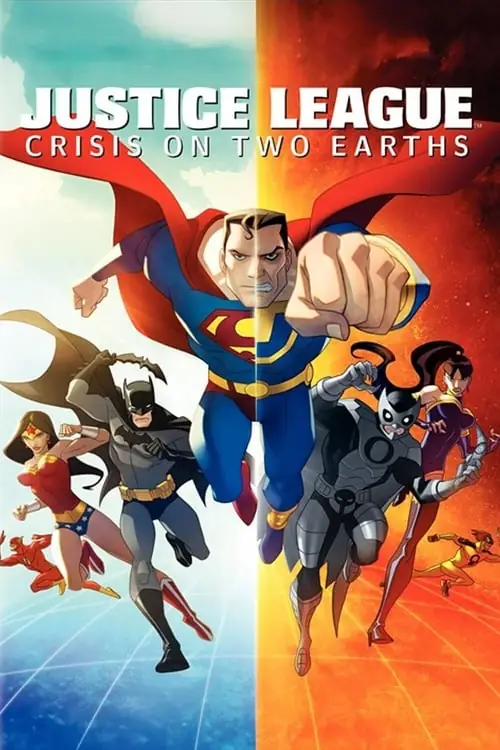
Animated superhero cinema rarely achieves the philosophical density on display here, as the DC Universe's multiversal conceit becomes a vehicle for exploring the nature of moral choice itself. The premise is elegantly symmetrical: a version of Lex Luthor who is virtuous crosses dimensional boundaries to implore the Justice League for assistance against the Crime Syndicate—his world's reflection of the League, warped into instruments of tyranny rather than protection. The mirror-image structure invites the audience to contemplate what distinguishes heroism from villainy, beyond mere circumstance and the accident of which side of reality one occupies. The Crime Syndicate members are not simply evil twins but warped extrapolations, their powers identical but their applications grotesque. Ultraman's strength serves domination rather than protection; Superwoman's abilities feed cruelty rather than compassion. Most compelling—and most troubling—is Owlman, the counterpart to Batman, whose intellect and strategic brilliance have been severed from any moral anchor. His plan to destroy all existence carries a nihilistic logic that the film treats with unsettling seriousness: if every choice creates a parallel world where the opposite choice was made, then no decision carries ultimate meaning, and the destruction of everything becomes not madness but the only logically consistent response to an infinite multiverse. This philosophical undercurrent elevates what could have been a straightforward interdimensional brawl into something closer to speculative fiction. The animation style, influenced by the brash clarity of comic book aesthetics, delivers action sequences with kinetic precision while allowing quieter moments to register emotionally. The voice performances convey the particular anguish of characters confronting versions of themselves stripped of everything they value—the revelation that one's gifts can serve annihilation as readily as justice. The climactic confrontation between Batman and Owlman operates as a debate about whether meaning is inherent or constructed, whether choosing to protect reality is an act of rationality or faith. The film's answer—that meaning is created through the act of choosing, regardless of cosmic architecture—resonates beyond its genre trappings, making this one of the more intellectually ambitious entries in the DC animated canon.
Animated superhero cinema rarely achieves the philosophical density on display here, as the DC Universe's multiversal conceit becomes a vehicle for exploring the nature of moral choice itself. The premise is elegantly symmetrical: a version of Lex Luthor who is virtuous crosses dimensional boundaries to implore the Justice League for assistance against the Crime Syndicate—his world's reflection of the League, warped into instruments of tyranny rather than protection. The mirror-image structure invites the audience to contemplate what distinguishes heroism from villainy, beyond mere circumstance and the accident of which side of reality one occupies. The Crime Syndicate members are not simply evil twins but warped extrapolations, their powers identical but their applications grotesque. Ultraman's strength serves domination rather than protection; Superwoman's abilities feed cruelty rather than compassion. Most compelling—and most troubling—is Owlman, the counterpart to Batman, whose intellect and strategic brilliance have been severed from any moral anchor. His plan to destroy all existence carries a nihilistic logic that the film treats with unsettling seriousness: if every choice creates a parallel world where the opposite choice was made, then no decision carries ultimate meaning, and the destruction of everything becomes not madness but the only logically consistent response to an infinite multiverse. This philosophical undercurrent elevates what could have been a straightforward interdimensional brawl into something closer to speculative fiction. The animation style, influenced by the brash clarity of comic book aesthetics, delivers action sequences with kinetic precision while allowing quieter moments to register emotionally. The voice performances convey the particular anguish of characters confronting versions of themselves stripped of everything they value—the revelation that one's gifts can serve annihilation as readily as justice. The climactic confrontation between Batman and Owlman operates as a debate about whether meaning is inherent or constructed, whether choosing to protect reality is an act of rationality or faith. The film's answer—that meaning is created through the act of choosing, regardless of cosmic architecture—resonates beyond its genre trappings, making this one of the more intellectually ambitious entries in the DC animated canon.
— Curator's log, recorded 2003±25 BCE
Water has long served as cinema's most mutable metaphor — a medium of transformation, disappearance, and the…

Operating in a register of unbridled creative excess, this audacious genre hybrid reimagines Shakespearean…

Constantin Brâncuși stands as one of the towering figures of modern sculpture, an artist who stripped form…

The American frontier of the 1850s serves as the punishing backdrop for this morally intricate western-horror…