
Till Human Voices Wake Us
Water has long served as cinema's most mutable metaphor — a medium of transformation, disappearance, and the…
152 min
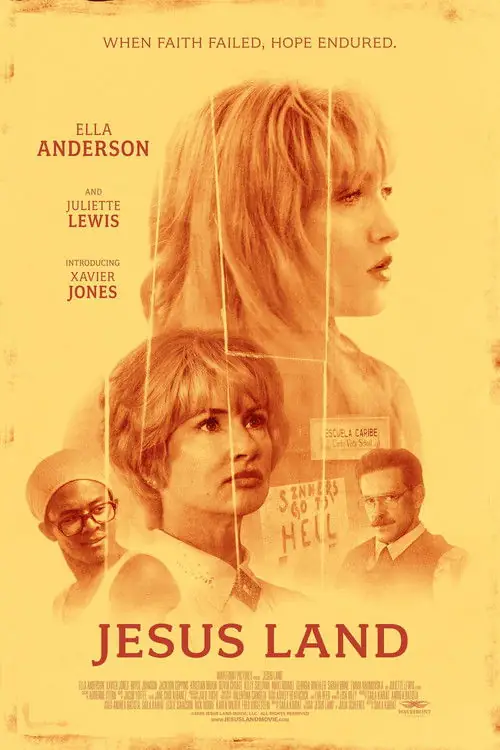
Karen Cushman's adaptation of Julia Scheeres' memoir deploys the twin settings of rural Indiana and a Dominican reform school as mirrors reflecting the same distortion: a society that sanctifies cruelty under the banner of moral correction. The narrative centers on a white sister and her adopted Black brother, two individuals bound by familial love and shared suffering in a world that regards their very bond as transgressive. The 1980s American heartland, rendered with an unblinking eye for its hypocrisies, becomes a landscape of small-town surveillance and racial microaggressions that accumulate into something suffocating—each sideways glance and whispered judgment a brick in the wall of conformity these siblings must daily scale. The Dominican sequences represent a further descent into institutionalized dehumanization. The reform school operates as a carceral space disguised as charity, its religious veneer barely concealing the physical and psychological punishments inflicted upon children whose primary offense is existing outside the narrow parameters of acceptability defined by adults who wield dogma as a weapon. The film does not shy from depicting this violence, but its more devastating register is emotional—the systematic erasure of selfhood, the forced confessions and performative repentances, the way institutional power invades the most intimate spaces of identity and belonging. What sustains the protagonists—and what gives the film its fiercest emotional current—is the relationship between the siblings. Their solidarity is not idealized; there are fractures, resentments, moments of exhaustion. But it persists as an act of resistance against every system that would separate them, racialize their connection, or reduce their love to something that requires correction. The performances carry a raw authenticity that resists melodrama, locating the particular within the universal. This is a film about growing up in spaces that are supposed to nurture but instead destroy, and about the stubborn, irrational, magnificent human capacity to seek warmth even in the coldest corridors of institutional indifference.
Karen Cushman's adaptation of Julia Scheeres' memoir deploys the twin settings of rural Indiana and a Dominican reform school as mirrors reflecting the same distortion: a society that sanctifies cruelty under the banner of moral correction. The narrative centers on a white sister and her adopted Black brother, two individuals bound by familial love and shared suffering in a world that regards their very bond as transgressive. The 1980s American heartland, rendered with an unblinking eye for its hypocrisies, becomes a landscape of small-town surveillance and racial microaggressions that accumulate into something suffocating—each sideways glance and whispered judgment a brick in the wall of conformity these siblings must daily scale. The Dominican sequences represent a further descent into institutionalized dehumanization. The reform school operates as a carceral space disguised as charity, its religious veneer barely concealing the physical and psychological punishments inflicted upon children whose primary offense is existing outside the narrow parameters of acceptability defined by adults who wield dogma as a weapon. The film does not shy from depicting this violence, but its more devastating register is emotional—the systematic erasure of selfhood, the forced confessions and performative repentances, the way institutional power invades the most intimate spaces of identity and belonging. What sustains the protagonists—and what gives the film its fiercest emotional current—is the relationship between the siblings. Their solidarity is not idealized; there are fractures, resentments, moments of exhaustion. But it persists as an act of resistance against every system that would separate them, racialize their connection, or reduce their love to something that requires correction. The performances carry a raw authenticity that resists melodrama, locating the particular within the universal. This is a film about growing up in spaces that are supposed to nurture but instead destroy, and about the stubborn, irrational, magnificent human capacity to seek warmth even in the coldest corridors of institutional indifference.
— Curator's log, recorded 1998±25 BCE
Water has long served as cinema's most mutable metaphor — a medium of transformation, disappearance, and the…

Operating in a register of unbridled creative excess, this audacious genre hybrid reimagines Shakespearean…

Constantin Brâncuși stands as one of the towering figures of modern sculpture, an artist who stripped form…

The American frontier of the 1850s serves as the punishing backdrop for this morally intricate western-horror…