
Till Human Voices Wake Us
Water has long served as cinema's most mutable metaphor — a medium of transformation, disappearance, and the…
152 min
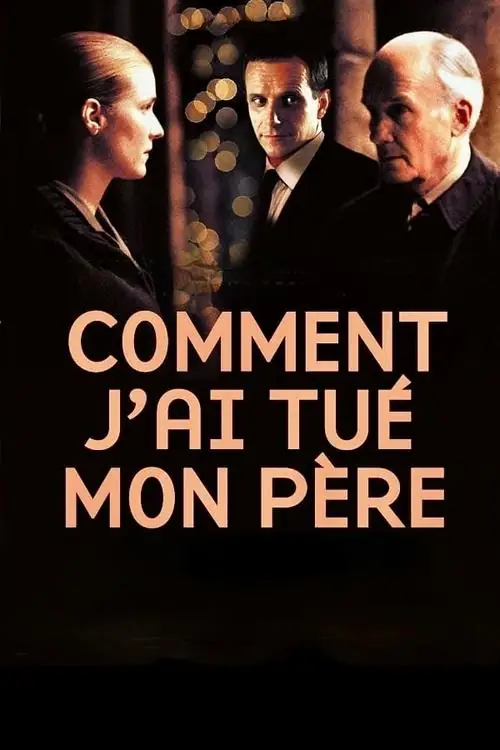
How I Killed My Father is a chamber drama of unnerving emotional precision, one that takes the Oedipal template and strips it of mythological grandeur to reveal the raw, uncomfortable particularity of a single family's damage. Jean-Luc has built a successful medical career and an orderly existence, constructing a life that seems, from the outside, to exemplify competence and control. Into this carefully maintained equilibrium, his absent father reappears — not as a penitent seeking reconciliation but as a fact that cannot be ignored, a living challenge to every narrative Jean-Luc has told himself about who he is and how he came to be. The film's title, with its violent hyperbole, captures the psychic reality even as it withholds literal confirmation. To kill one's father, in the emotional grammar of this story, is not necessarily to end his life but to extinguish the hold he exerts, to sever the invisible cords of expectation, resentment, and unfinished longing that bind child to parent across any distance of time and silence. Jean-Luc's struggle is not with whether to forgive but with whether forgiveness is even possible when the wound has shaped the very person who must extend it. The performances are extraordinary in their restraint, especially in the scenes where the two men occupy the same space without ever fully occupying the same emotional register. The father carries his own opacity — we are never permitted the comfort of understanding him completely — and this withholding mirrors the experience of the child who must grapple with a presence that was always, even before the disappearance, partially absent. Supporting characters orbit this central confrontation, their own needs and perspectives refracting the conflict without ever resolving it. Director Anne Fontaine approaches the material with a clinical patience that some may find excruciating but that feels essential to the subject. There are no cathartic confrontations, no tearful reconciliations, only the slow, uncertain work of two people trying to occupy the same reality after years of inhabiting separate ones. The result is a film that honors the irreducible complexity of filial love — its capacity to wound and sustain in the same gesture.
How I Killed My Father is a chamber drama of unnerving emotional precision, one that takes the Oedipal template and strips it of mythological grandeur to reveal the raw, uncomfortable particularity of a single family's damage. Jean-Luc has built a successful medical career and an orderly existence, constructing a life that seems, from the outside, to exemplify competence and control. Into this carefully maintained equilibrium, his absent father reappears — not as a penitent seeking reconciliation but as a fact that cannot be ignored, a living challenge to every narrative Jean-Luc has told himself about who he is and how he came to be. The film's title, with its violent hyperbole, captures the psychic reality even as it withholds literal confirmation. To kill one's father, in the emotional grammar of this story, is not necessarily to end his life but to extinguish the hold he exerts, to sever the invisible cords of expectation, resentment, and unfinished longing that bind child to parent across any distance of time and silence. Jean-Luc's struggle is not with whether to forgive but with whether forgiveness is even possible when the wound has shaped the very person who must extend it. The performances are extraordinary in their restraint, especially in the scenes where the two men occupy the same space without ever fully occupying the same emotional register. The father carries his own opacity — we are never permitted the comfort of understanding him completely — and this withholding mirrors the experience of the child who must grapple with a presence that was always, even before the disappearance, partially absent. Supporting characters orbit this central confrontation, their own needs and perspectives refracting the conflict without ever resolving it. Director Anne Fontaine approaches the material with a clinical patience that some may find excruciating but that feels essential to the subject. There are no cathartic confrontations, no tearful reconciliations, only the slow, uncertain work of two people trying to occupy the same reality after years of inhabiting separate ones. The result is a film that honors the irreducible complexity of filial love — its capacity to wound and sustain in the same gesture.
— Curator's log, recorded 1944±25 BCE
Water has long served as cinema's most mutable metaphor — a medium of transformation, disappearance, and the…

Operating in a register of unbridled creative excess, this audacious genre hybrid reimagines Shakespearean…

Constantin Brâncuși stands as one of the towering figures of modern sculpture, an artist who stripped form…

The American frontier of the 1850s serves as the punishing backdrop for this morally intricate western-horror…