
Till Human Voices Wake Us
Water has long served as cinema's most mutable metaphor — a medium of transformation, disappearance, and the…
152 min
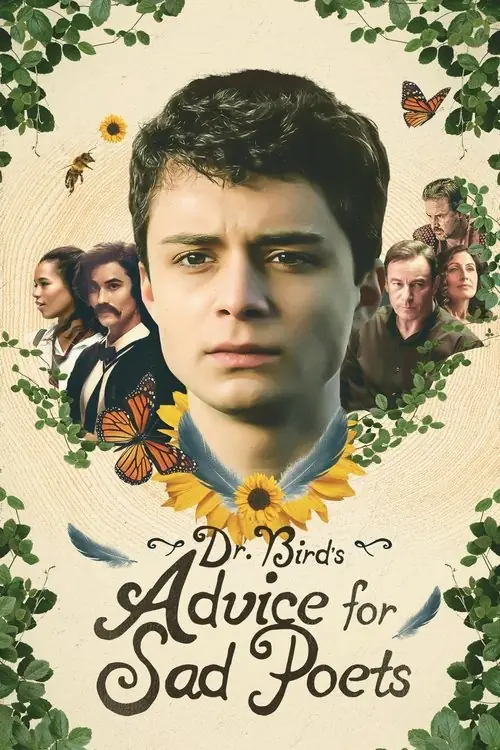
Navigating the turbulent interior landscape of adolescent mental illness with a formal inventiveness that matches the anarchic energy of its protagonist's psyche, this film adopts a visual and narrative vocabulary as unpredictable and vivid as the mind it portrays. Sixteen-year-old James Whitman exists in a state of perpetual emotional emergency, his anxiety and depression forming a dual-pronged assault on his capacity to function in a world that seems designed to aggravate rather than soothe his condition. His primary coping mechanism—conversational therapy with Dr. Bird, an enormous imaginary pigeon who serves as both counselor and comic foil—is the film's most audacious conceit, externalizing the internal dialogue of self-soothing in a manner that is simultaneously absurd, endearing, and piercingly sad. The decision to render Dr. Bird as a tangible, visually realized presence rather than a mere voice-over is crucial to the film's emotional architecture. By giving the phantom therapist physical form, the filmmakers make visible the elaborate scaffolding of imaginative defense that James has constructed around his vulnerability, allowing the audience to witness both its resourcefulness and its inadequacy. Dr. Bird dispenses advice that ranges from the genuinely helpful to the profoundly unhelpful, mirroring the hit-or-miss quality of any therapeutic process and refusing the reductive narrative in which mental illness is simply cured by the right intervention. The world James inhabits—rendered in a visual style that shifts registers between naturalistic depiction and expressionist distortion—reflects the volatility of his emotional states. School corridors elongate into oppressive tunnels, domestic spaces contract into claustrophobic enclosures, and moments of relief bloom into unexpected expanses of light and color. The film's tonal range mirrors this visual instability, careening from antic humor to devastating sadness sometimes within the same scene, capturing the whiplash quality of living with a mind that refuses to maintain a steady emotional temperature. What ultimately distinguishes the film from the growing subgenre of adolescent mental-health narratives is its resistance to easy catharsis. James does not overcome his anxiety so much as learn to coexist with it, negotiating a détente with his own neurochemistry that permits moments of genuine connection and tentative hope without promising the permanent remission that would ring false. Dr. Bird's most valuable advice, the film suggests, is not any specific therapeutic technique but the implicit acknowledgment that the struggle itself constitutes a form of courage—a recognition that the simple act of continuing to engage with a painful world is its own kind of heroism.
Navigating the turbulent interior landscape of adolescent mental illness with a formal inventiveness that matches the anarchic energy of its protagonist's psyche, this film adopts a visual and narrative vocabulary as unpredictable and vivid as the mind it portrays. Sixteen-year-old James Whitman exists in a state of perpetual emotional emergency, his anxiety and depression forming a dual-pronged assault on his capacity to function in a world that seems designed to aggravate rather than soothe his condition. His primary coping mechanism—conversational therapy with Dr. Bird, an enormous imaginary pigeon who serves as both counselor and comic foil—is the film's most audacious conceit, externalizing the internal dialogue of self-soothing in a manner that is simultaneously absurd, endearing, and piercingly sad. The decision to render Dr. Bird as a tangible, visually realized presence rather than a mere voice-over is crucial to the film's emotional architecture. By giving the phantom therapist physical form, the filmmakers make visible the elaborate scaffolding of imaginative defense that James has constructed around his vulnerability, allowing the audience to witness both its resourcefulness and its inadequacy. Dr. Bird dispenses advice that ranges from the genuinely helpful to the profoundly unhelpful, mirroring the hit-or-miss quality of any therapeutic process and refusing the reductive narrative in which mental illness is simply cured by the right intervention. The world James inhabits—rendered in a visual style that shifts registers between naturalistic depiction and expressionist distortion—reflects the volatility of his emotional states. School corridors elongate into oppressive tunnels, domestic spaces contract into claustrophobic enclosures, and moments of relief bloom into unexpected expanses of light and color. The film's tonal range mirrors this visual instability, careening from antic humor to devastating sadness sometimes within the same scene, capturing the whiplash quality of living with a mind that refuses to maintain a steady emotional temperature. What ultimately distinguishes the film from the growing subgenre of adolescent mental-health narratives is its resistance to easy catharsis. James does not overcome his anxiety so much as learn to coexist with it, negotiating a détente with his own neurochemistry that permits moments of genuine connection and tentative hope without promising the permanent remission that would ring false. Dr. Bird's most valuable advice, the film suggests, is not any specific therapeutic technique but the implicit acknowledgment that the struggle itself constitutes a form of courage—a recognition that the simple act of continuing to engage with a painful world is its own kind of heroism.
— Curator's log, recorded 1945±25 BCE
Water has long served as cinema's most mutable metaphor — a medium of transformation, disappearance, and the…

Operating in a register of unbridled creative excess, this audacious genre hybrid reimagines Shakespearean…

Constantin Brâncuși stands as one of the towering figures of modern sculpture, an artist who stripped form…

The American frontier of the 1850s serves as the punishing backdrop for this morally intricate western-horror…