
Till Human Voices Wake Us
Water has long served as cinema's most mutable metaphor — a medium of transformation, disappearance, and the…
152 min
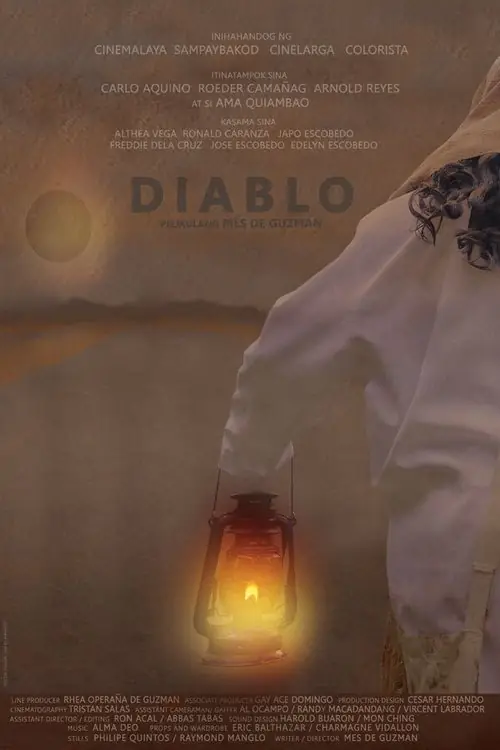
Sleep, that most universal of human vulnerabilities, becomes a portal to existential terror in this Philippine film that transforms the privacy of a darkened bedroom into a theater of metaphysical dread. Nana Lusing lies awake each night, her eyes fixed on a shadowy figure that materializes at the periphery of her vision and retreats whenever she attempts to confront it directly. The entity — if it can be called that — refuses easy classification. Is it the Devil, come to claim a soul? The specter of her deceased husband, returned from beyond with unfinished business? A physical manifestation of anxieties that have accumulated across a lifetime of worry and loss? Or merely the projection of an aging mind grappling with the encroachment of mortality? The film's genius lies in its refusal to resolve this central ambiguity. Each possibility is presented with equal conviction and equal doubt, the narrative shifting its interpretive framework with the fluidity of a shadow changing shape under flickering light. The cinematography reinforces this indeterminacy through a visual strategy that makes the darkness itself a character — pools of shadow that seem to breathe, corners that deepen and recede, edges of the frame where the figure might or might not be lurking. The audience shares Nana Lusing's uncertainty, scanning each composition for evidence of the presence she describes and finding only the suggestive absence that fuels her torment. Cultural context enriches the film's resonance considerably. Philippine folk tradition brims with accounts of supernatural visitation, and the figure haunting Nana Lusing resonates with local beliefs about spirits of the dead who linger near the living, unable or unwilling to complete their passage to the other side. Yet the film never reduces its protagonist's experience to cultural stereotype, instead treating her faith and her fear with the seriousness they deserve while maintaining space for psychological and even physiological explanations. The result is a work that occupies multiple registers simultaneously — folk horror, character study, meditation on aging — without privileging any single interpretation above the others. The performance at the film's center is extraordinary in its restraint, conveying the exhaustion of chronic insomnia, the defiance of a woman who refuses to be terrorized in her own home, and the creeping suspicion that the darkness she fears may be inseparable from the darkness within. The final scene, staged with devastating simplicity, suggests that the most terrifying question is not what lurks in the shadows but whether the distinction between the spectral and the psychological is itself an illusion we maintain to keep from confronting the void that waits at the edge of every sleepless night.
Sleep, that most universal of human vulnerabilities, becomes a portal to existential terror in this Philippine film that transforms the privacy of a darkened bedroom into a theater of metaphysical dread. Nana Lusing lies awake each night, her eyes fixed on a shadowy figure that materializes at the periphery of her vision and retreats whenever she attempts to confront it directly. The entity — if it can be called that — refuses easy classification. Is it the Devil, come to claim a soul? The specter of her deceased husband, returned from beyond with unfinished business? A physical manifestation of anxieties that have accumulated across a lifetime of worry and loss? Or merely the projection of an aging mind grappling with the encroachment of mortality? The film's genius lies in its refusal to resolve this central ambiguity. Each possibility is presented with equal conviction and equal doubt, the narrative shifting its interpretive framework with the fluidity of a shadow changing shape under flickering light. The cinematography reinforces this indeterminacy through a visual strategy that makes the darkness itself a character — pools of shadow that seem to breathe, corners that deepen and recede, edges of the frame where the figure might or might not be lurking. The audience shares Nana Lusing's uncertainty, scanning each composition for evidence of the presence she describes and finding only the suggestive absence that fuels her torment. Cultural context enriches the film's resonance considerably. Philippine folk tradition brims with accounts of supernatural visitation, and the figure haunting Nana Lusing resonates with local beliefs about spirits of the dead who linger near the living, unable or unwilling to complete their passage to the other side. Yet the film never reduces its protagonist's experience to cultural stereotype, instead treating her faith and her fear with the seriousness they deserve while maintaining space for psychological and even physiological explanations. The result is a work that occupies multiple registers simultaneously — folk horror, character study, meditation on aging — without privileging any single interpretation above the others. The performance at the film's center is extraordinary in its restraint, conveying the exhaustion of chronic insomnia, the defiance of a woman who refuses to be terrorized in her own home, and the creeping suspicion that the darkness she fears may be inseparable from the darkness within. The final scene, staged with devastating simplicity, suggests that the most terrifying question is not what lurks in the shadows but whether the distinction between the spectral and the psychological is itself an illusion we maintain to keep from confronting the void that waits at the edge of every sleepless night.
— Curator's log, recorded 1964±25 BCE
Water has long served as cinema's most mutable metaphor — a medium of transformation, disappearance, and the…

Operating in a register of unbridled creative excess, this audacious genre hybrid reimagines Shakespearean…

Constantin Brâncuși stands as one of the towering figures of modern sculpture, an artist who stripped form…

The American frontier of the 1850s serves as the punishing backdrop for this morally intricate western-horror…