
Till Human Voices Wake Us
Water has long served as cinema's most mutable metaphor — a medium of transformation, disappearance, and the…
152 min
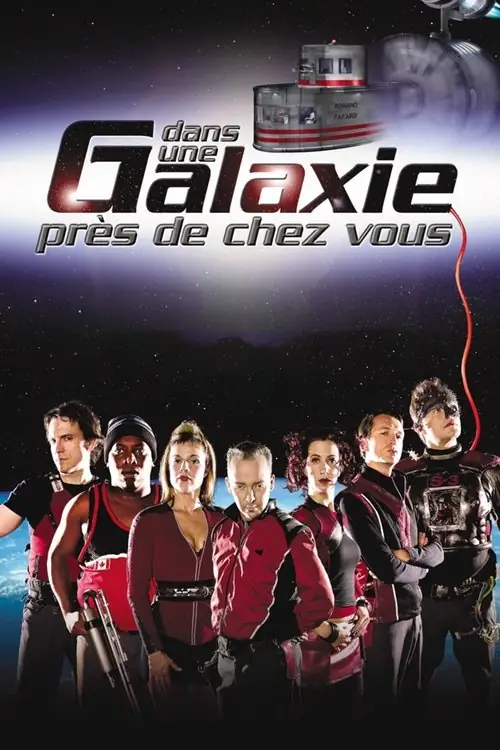
A gloriously irreverent science-fiction parody that sends up the tropes of space-opera exploration with a distinctly Québécois sensibility, this film extends the universe of a beloved television series into a feature-length format that preserves and amplifies its source material's unique blend of satirical edge and genuine affection for the genre it lampoons. Set in the year 2034, after humanity's wanton environmental degradation has destroyed the ozone layer and rendered Earth increasingly uninhabitable, the narrative follows the hapless crew of a spaceship dispatched from an independent Quebec to scour the cosmos for a planet capable of accommodating six billion refugees. The premise itself functions as both science-fiction hook and political joke—a province that has never quite achieved national independence on Earth now seeks an entire planet to call its own. The seven crew members constitute a rogues' gallery of interstellar incompetence and interpersonal dysfunction, their interactions governed by the kind of petty squabbles and institutional absurdities that will be familiar to anyone who has worked in any large organization, never mind a spacefaring one. The film derives enormous comic mileage from the collision between the grandeur of their mission—nothing less than the continuation of the species—and the grubby realities of their execution, where equipment malfunctions, bureaucratic directives, and personality clashes constantly threaten to derail the enterprise. Each planet they encounter that might sustain life comes with its own deal-breaking complication, allowing the filmmakers to satirize a different aspect of human society with every new world. The production design is a marvel of shoestring ingenuity, creating environments that read as simultaneously cheap and charming—aesthetic choices that are themselves part of the joke, evoking the low-budget science-fiction television that inspired the parody while demonstrating genuine creative resourcefulness in their execution. The alien worlds are rendered with a cheeky literalness that sends up theimaginative limitations of the genre's more formulaic entries, and the creature effects achieve a kind of endearing absurdity that defies conventional critical standards. Beneath the comedy, however, lies a surprisingly pointed ecological allegory. The film's depiction of Earth's environmental collapse as the direct consequence of unchecked industrial pollution feels less satirical and more prophetic with each passing year, and the crew's increasingly desperate search for a replacement planet underscores the fundamental insanity of destroying one's home while assuming another will present itself. The humor, in other words, serves not as escape from reality but as confrontation with it—a strategy that has characterized the best satire from Swift to South Park and finds here another worthy entry in that venerable tradition.
A gloriously irreverent science-fiction parody that sends up the tropes of space-opera exploration with a distinctly Québécois sensibility, this film extends the universe of a beloved television series into a feature-length format that preserves and amplifies its source material's unique blend of satirical edge and genuine affection for the genre it lampoons. Set in the year 2034, after humanity's wanton environmental degradation has destroyed the ozone layer and rendered Earth increasingly uninhabitable, the narrative follows the hapless crew of a spaceship dispatched from an independent Quebec to scour the cosmos for a planet capable of accommodating six billion refugees. The premise itself functions as both science-fiction hook and political joke—a province that has never quite achieved national independence on Earth now seeks an entire planet to call its own. The seven crew members constitute a rogues' gallery of interstellar incompetence and interpersonal dysfunction, their interactions governed by the kind of petty squabbles and institutional absurdities that will be familiar to anyone who has worked in any large organization, never mind a spacefaring one. The film derives enormous comic mileage from the collision between the grandeur of their mission—nothing less than the continuation of the species—and the grubby realities of their execution, where equipment malfunctions, bureaucratic directives, and personality clashes constantly threaten to derail the enterprise. Each planet they encounter that might sustain life comes with its own deal-breaking complication, allowing the filmmakers to satirize a different aspect of human society with every new world. The production design is a marvel of shoestring ingenuity, creating environments that read as simultaneously cheap and charming—aesthetic choices that are themselves part of the joke, evoking the low-budget science-fiction television that inspired the parody while demonstrating genuine creative resourcefulness in their execution. The alien worlds are rendered with a cheeky literalness that sends up theimaginative limitations of the genre's more formulaic entries, and the creature effects achieve a kind of endearing absurdity that defies conventional critical standards. Beneath the comedy, however, lies a surprisingly pointed ecological allegory. The film's depiction of Earth's environmental collapse as the direct consequence of unchecked industrial pollution feels less satirical and more prophetic with each passing year, and the crew's increasingly desperate search for a replacement planet underscores the fundamental insanity of destroying one's home while assuming another will present itself. The humor, in other words, serves not as escape from reality but as confrontation with it—a strategy that has characterized the best satire from Swift to South Park and finds here another worthy entry in that venerable tradition.
— Curator's log, recorded 1959±25 BCE
Water has long served as cinema's most mutable metaphor — a medium of transformation, disappearance, and the…

Operating in a register of unbridled creative excess, this audacious genre hybrid reimagines Shakespearean…

Constantin Brâncuși stands as one of the towering figures of modern sculpture, an artist who stripped form…

The American frontier of the 1850s serves as the punishing backdrop for this morally intricate western-horror…