
Till Human Voices Wake Us
Water has long served as cinema's most mutable metaphor — a medium of transformation, disappearance, and the…
152 min
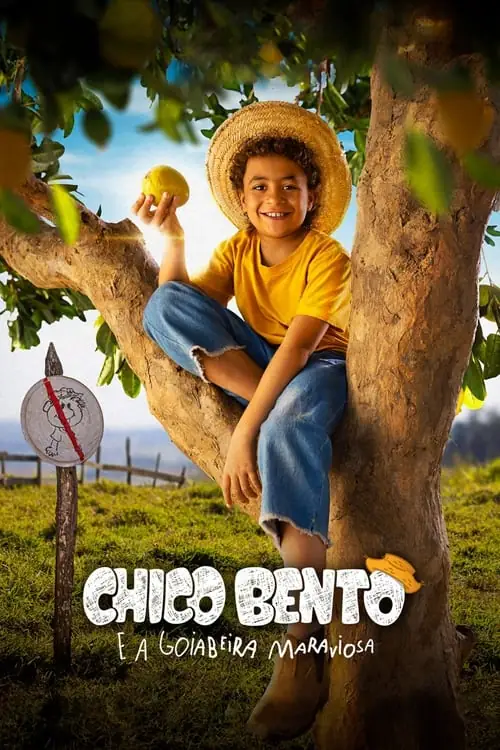
This Brazilian animated feature transforms a seemingly simple premise—a beloved guava tree threatened by municipal development—into a vibrant allegory about community, heritage, and the resistance of ordinary people to the indifferent machinery of progress. Chuck Billy's lifelong relationship with Jed's guava tree is not merely agricultural but existential; the tree has provided sustenance, shade, and a gathering point for the neighborhood, functioning as a living landmark around which the rhythms of daily life have organized themselves for generations. The announcement that Dr. Agripino's proposed road will require the tree's removal strikes at something deeper than aesthetics or convenience—it represents the severing of a connection between people and place that cannot be compensated by improved traffic flow. The film's visual style bursts with the saturated colors and exuberant character design characteristic of Brazilian animation, rendering the rural landscape as a space of warmth and fecundity that makes the encroachment of asphalt and concrete feel like an invasion from a greyer, more mechanistic world. Chuck Billy and his friends are depicted not as nostalgic reactionaries opposed to any change but as defenders of a specific value system—one in which the measurement of civic benefit includes factors that cannot be quantified on an engineer's spreadsheet. Their campaign to save the tree mobilizes creativity and solidarity, the community discovering resources of imagination and determination that the rational calculations of municipal planning failed to anticipate. The antagonism between Chuck Billy's coalition and Dr. Agripino's development agenda encapsulates a tension that resonates far beyond the film's specific setting: the question of who gets to define progress and whose voices are excluded from the conversation when that definition is being formulated. The film does not demonize the forces of development but insists that they account for the intangible values—the memories embedded in a place, the rituals that give it meaning, the way a single tree can anchor an entire community's sense of belonging—that are invisible to cost-benefit analysis. It is a small story told with big-hearted conviction, animated with a vigor that matches the passion of its characters, and resolved with a faith in collective action that feels both inspirational and, in its modest way, radical.
This Brazilian animated feature transforms a seemingly simple premise—a beloved guava tree threatened by municipal development—into a vibrant allegory about community, heritage, and the resistance of ordinary people to the indifferent machinery of progress. Chuck Billy's lifelong relationship with Jed's guava tree is not merely agricultural but existential; the tree has provided sustenance, shade, and a gathering point for the neighborhood, functioning as a living landmark around which the rhythms of daily life have organized themselves for generations. The announcement that Dr. Agripino's proposed road will require the tree's removal strikes at something deeper than aesthetics or convenience—it represents the severing of a connection between people and place that cannot be compensated by improved traffic flow. The film's visual style bursts with the saturated colors and exuberant character design characteristic of Brazilian animation, rendering the rural landscape as a space of warmth and fecundity that makes the encroachment of asphalt and concrete feel like an invasion from a greyer, more mechanistic world. Chuck Billy and his friends are depicted not as nostalgic reactionaries opposed to any change but as defenders of a specific value system—one in which the measurement of civic benefit includes factors that cannot be quantified on an engineer's spreadsheet. Their campaign to save the tree mobilizes creativity and solidarity, the community discovering resources of imagination and determination that the rational calculations of municipal planning failed to anticipate. The antagonism between Chuck Billy's coalition and Dr. Agripino's development agenda encapsulates a tension that resonates far beyond the film's specific setting: the question of who gets to define progress and whose voices are excluded from the conversation when that definition is being formulated. The film does not demonize the forces of development but insists that they account for the intangible values—the memories embedded in a place, the rituals that give it meaning, the way a single tree can anchor an entire community's sense of belonging—that are invisible to cost-benefit analysis. It is a small story told with big-hearted conviction, animated with a vigor that matches the passion of its characters, and resolved with a faith in collective action that feels both inspirational and, in its modest way, radical.
— Curator's log, recorded 1996±25 BCE
Water has long served as cinema's most mutable metaphor — a medium of transformation, disappearance, and the…

Operating in a register of unbridled creative excess, this audacious genre hybrid reimagines Shakespearean…

Constantin Brâncuși stands as one of the towering figures of modern sculpture, an artist who stripped form…

The American frontier of the 1850s serves as the punishing backdrop for this morally intricate western-horror…