
Till Human Voices Wake Us
Water has long served as cinema's most mutable metaphor — a medium of transformation, disappearance, and the…
152 min
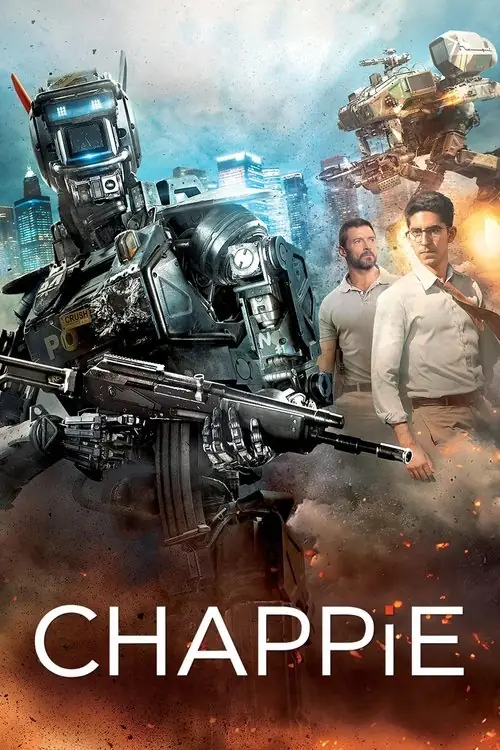
Neill Blomkamp's sophomore feature occupies a curious space in the landscape of science fiction cinema—one where the philosophical ambitions of artificial intelligence narratives collide with the gritty, visually textured aesthetics of his Johannesburg setting. At its core, the film poses a deceptively simple question: what happens when a sentient machine is forced to navigate the moral chaos of the human world? The titular character, a police droid repurposed and reprogrammed by a pair of small-time criminals, becomes a vessel for exploring consciousness, nurture versus nature, and the ways in which environment shapes identity. The brilliance of the premise lies in its inversion of the usual AI narrative. Rather than a coldly logical being that gradually learns warmth, the robot begins as a child—curious, impressionable, desperate for approval and belonging. His adoptive caretakers, played with rough-edged charisma by Ninja and Yo-Landi Visser of Die Antwoord, are hardly role models. They are products of a socioeconomic system that has abandoned them, and they pass their anxieties, loyalties, and moral shortcuts onto their artificial charge with the same casual carelessness that any parent might. Sharlto Copley's vocal performance as the robot is remarkable, capturing the cadence of a developing mind with nuance that transcends motion-capture gimmickry. Blomkamp's visual sensibility remains one of the most distinctive in contemporary science fiction. The city is rendered not as a futuristic abstraction but as a lived-in, rust-streaked reality where technology and poverty coexist in uneasy proximity. Hugh Jackman's militaristic antagonist and Sigourney Weaver's corporate functionary represent the systemic forces that would reduce a thinking being to either a weapon or a commodity. The film's emotional climax is both exhilarating and melancholic, arguing that true personhood is forged not through programming but through the messy, often painful experience of choosing who to become.
Neill Blomkamp's sophomore feature occupies a curious space in the landscape of science fiction cinema—one where the philosophical ambitions of artificial intelligence narratives collide with the gritty, visually textured aesthetics of his Johannesburg setting. At its core, the film poses a deceptively simple question: what happens when a sentient machine is forced to navigate the moral chaos of the human world? The titular character, a police droid repurposed and reprogrammed by a pair of small-time criminals, becomes a vessel for exploring consciousness, nurture versus nature, and the ways in which environment shapes identity. The brilliance of the premise lies in its inversion of the usual AI narrative. Rather than a coldly logical being that gradually learns warmth, the robot begins as a child—curious, impressionable, desperate for approval and belonging. His adoptive caretakers, played with rough-edged charisma by Ninja and Yo-Landi Visser of Die Antwoord, are hardly role models. They are products of a socioeconomic system that has abandoned them, and they pass their anxieties, loyalties, and moral shortcuts onto their artificial charge with the same casual carelessness that any parent might. Sharlto Copley's vocal performance as the robot is remarkable, capturing the cadence of a developing mind with nuance that transcends motion-capture gimmickry. Blomkamp's visual sensibility remains one of the most distinctive in contemporary science fiction. The city is rendered not as a futuristic abstraction but as a lived-in, rust-streaked reality where technology and poverty coexist in uneasy proximity. Hugh Jackman's militaristic antagonist and Sigourney Weaver's corporate functionary represent the systemic forces that would reduce a thinking being to either a weapon or a commodity. The film's emotional climax is both exhilarating and melancholic, arguing that true personhood is forged not through programming but through the messy, often painful experience of choosing who to become.
— Curator's log, recorded 1948±25 BCE
Water has long served as cinema's most mutable metaphor — a medium of transformation, disappearance, and the…

Operating in a register of unbridled creative excess, this audacious genre hybrid reimagines Shakespearean…

Constantin Brâncuși stands as one of the towering figures of modern sculpture, an artist who stripped form…

The American frontier of the 1850s serves as the punishing backdrop for this morally intricate western-horror…