
Till Human Voices Wake Us
Water has long served as cinema's most mutable metaphor — a medium of transformation, disappearance, and the…
152 min
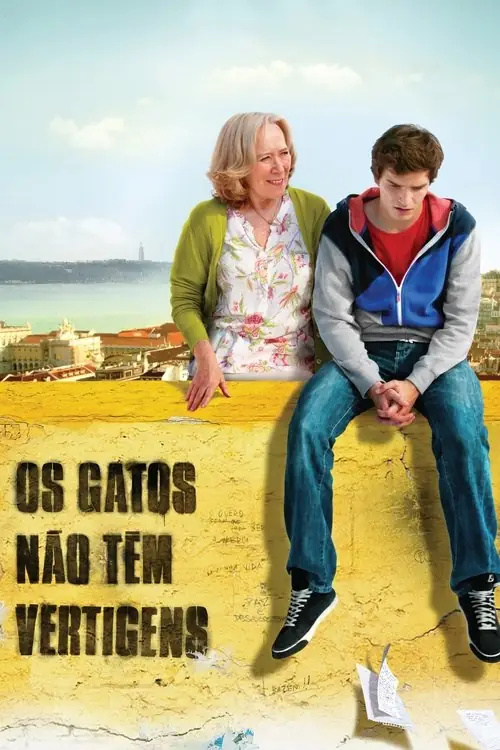
The birthday that should mark celebration instead becomes an occasion for exile in this Brazilian drama, which opens with Jô being expelled from the family home by his own father — an act of parental rejection so casually cruel that it lands with the force of physical violence. Cast out with nothing but the clothes on his back and the bewildered hurt of someone who cannot comprehend what he has done to deserve such banishment, Jô drifts through the streets of his city like a ghost dislocated from its haunt. He is young, resourceless, and utterly alone, a combination that the film refuses to romanticize even as it insists on his fundamental dignity. Salvation arrives in the most unlikely form: a rooftop terrace where Rose, recently widowed and marooned in her own particular solitude, allows Jô to take shelter. The terrace itself becomes the film's central spatial metaphor — an elevated liminal zone between the suffocating interiors of private grief and the indifferent expanses of the public world below. It is a place of exposure and perspective, where one can see the entire city while remaining invisible to it, and where two people stripped of their familiar moorings might tentatively construct something resembling a shared life. The relationship that develops between Jô and Rose resists easy categorization. It is not quite maternal, not quite romantic, not merely a transaction of convenience. The film allows this ambiguity to breathe, staging their interactions in long, unhurried scenes that observe the rhythms of cohabitation with anthropological patience: the negotiation of shared space, the gradual accumulation of domestic ritual, the moments when loneliness relaxes its grip just enough to permit genuine connection. Both performers bring a physical authenticity that communicates volumes — the way Rose's posture gradually unbends, the way Jô's restless energy finds productive channels in the small repairs and attentions that transform the terrace into something resembling a home. The title's reference to cats and vertigo introduces a note of metaphorical playfulness that the film deploys with characteristic subtlety. Cats, of course, are legendary for always landing on their feet — a quality that both characters share in their stubborn refusal to be broken by circumstance. Vertigo, by contrast, is the disorienting sensation of losing one's footing, of feeling the ground shift beneath you. The film resides in the tension between these two conditions: the resilience that keeps us upright and the dizziness that reminds us how precarious our balance truly is. By its conclusion, it has earned a quiet, hard-won optimism that feels neither earned nor contrived but simply, stubbornly, human.
The birthday that should mark celebration instead becomes an occasion for exile in this Brazilian drama, which opens with Jô being expelled from the family home by his own father — an act of parental rejection so casually cruel that it lands with the force of physical violence. Cast out with nothing but the clothes on his back and the bewildered hurt of someone who cannot comprehend what he has done to deserve such banishment, Jô drifts through the streets of his city like a ghost dislocated from its haunt. He is young, resourceless, and utterly alone, a combination that the film refuses to romanticize even as it insists on his fundamental dignity. Salvation arrives in the most unlikely form: a rooftop terrace where Rose, recently widowed and marooned in her own particular solitude, allows Jô to take shelter. The terrace itself becomes the film's central spatial metaphor — an elevated liminal zone between the suffocating interiors of private grief and the indifferent expanses of the public world below. It is a place of exposure and perspective, where one can see the entire city while remaining invisible to it, and where two people stripped of their familiar moorings might tentatively construct something resembling a shared life. The relationship that develops between Jô and Rose resists easy categorization. It is not quite maternal, not quite romantic, not merely a transaction of convenience. The film allows this ambiguity to breathe, staging their interactions in long, unhurried scenes that observe the rhythms of cohabitation with anthropological patience: the negotiation of shared space, the gradual accumulation of domestic ritual, the moments when loneliness relaxes its grip just enough to permit genuine connection. Both performers bring a physical authenticity that communicates volumes — the way Rose's posture gradually unbends, the way Jô's restless energy finds productive channels in the small repairs and attentions that transform the terrace into something resembling a home. The title's reference to cats and vertigo introduces a note of metaphorical playfulness that the film deploys with characteristic subtlety. Cats, of course, are legendary for always landing on their feet — a quality that both characters share in their stubborn refusal to be broken by circumstance. Vertigo, by contrast, is the disorienting sensation of losing one's footing, of feeling the ground shift beneath you. The film resides in the tension between these two conditions: the resilience that keeps us upright and the dizziness that reminds us how precarious our balance truly is. By its conclusion, it has earned a quiet, hard-won optimism that feels neither earned nor contrived but simply, stubbornly, human.
— Curator's log, recorded 1948±25 BCE
Water has long served as cinema's most mutable metaphor — a medium of transformation, disappearance, and the…

Operating in a register of unbridled creative excess, this audacious genre hybrid reimagines Shakespearean…

Constantin Brâncuși stands as one of the towering figures of modern sculpture, an artist who stripped form…

The American frontier of the 1850s serves as the punishing backdrop for this morally intricate western-horror…