
Till Human Voices Wake Us
Water has long served as cinema's most mutable metaphor — a medium of transformation, disappearance, and the…
152 min
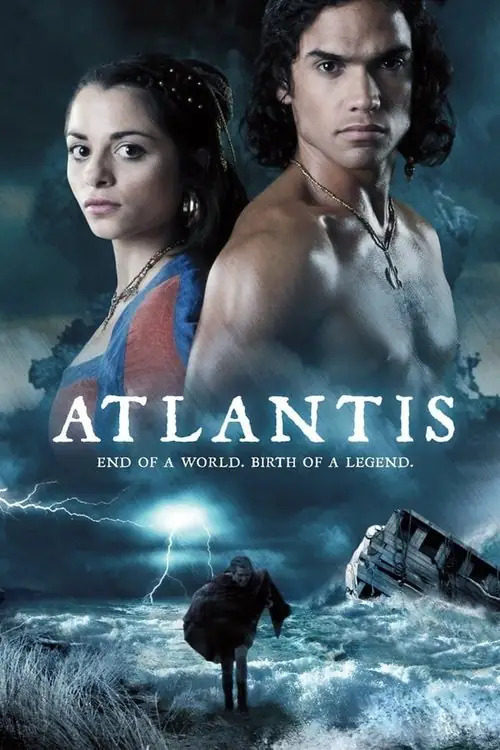
The lost civilization of Atlantis has haunted the Western imagination for millennia, serving simultaneously as a cautionary tale about hubris and a repository for fantasies of forgotten golden ages. This production attempts something bolder than mere mythological retelling: it seeks to ground the legend in geological and archaeological evidence, proposing that the catastrophic eruption of Thera — one of the most violent volcanic events in recorded history — may have provided the factual substrate upon which Plato and his successors constructed their philosophical fable. The result is a work that oscillates between dramatic reconstruction and scientific inquiry, creating a hybrid form that is part disaster epic and part historical detective story. The dramatized sequences depict the final days of a thriving Bronze Age civilization with an emphasis on sensory immersion — the oppressive heat of an Aegean summer, the first ominous tremors beneath the earth, the mounting dread of a populace sensing that their world is turning against them. These scenes are staged with a commitment to period authenticity that resists the temptation toward anachronistic spectacle, preferring the terror of slow, inescapable realization to the shock of sudden devastation. When the eruption finally arrives, it is rendered with a geological realism that makes the event feel less like a cinematic set piece than a humbling reminder of the planet's capacity for violence. Intercut with these dramatizations are contributions from historians, volcanologists, and classicists who trace the evidentiary threads connecting the Theran catastrophe to the Atlantis narrative. Their analysis illuminates the ways in which real trauma gets transmuted into myth — how a community's lived experience of annihilation can be preserved, distorted, and mythologized across centuries until it becomes a parable rather than a memory. This intellectual framework gives the dramatic portions a weight they might otherwise lack, transforming the eruption from a spectacle into a meditation on the relationship between history and storytelling. The production's most provocative suggestion is that the Atlantis legend functions as a kind of prehistoric trauma narrative, a cultural mechanism for processing an event so overwhelming that it could only be survived through metaphor. In this reading, the drowned city becomes not a fantasy of technological wonder but a monument to loss — an attempt to honor what was destroyed by refusing to let it vanish entirely from human memory.
The lost civilization of Atlantis has haunted the Western imagination for millennia, serving simultaneously as a cautionary tale about hubris and a repository for fantasies of forgotten golden ages. This production attempts something bolder than mere mythological retelling: it seeks to ground the legend in geological and archaeological evidence, proposing that the catastrophic eruption of Thera — one of the most violent volcanic events in recorded history — may have provided the factual substrate upon which Plato and his successors constructed their philosophical fable. The result is a work that oscillates between dramatic reconstruction and scientific inquiry, creating a hybrid form that is part disaster epic and part historical detective story. The dramatized sequences depict the final days of a thriving Bronze Age civilization with an emphasis on sensory immersion — the oppressive heat of an Aegean summer, the first ominous tremors beneath the earth, the mounting dread of a populace sensing that their world is turning against them. These scenes are staged with a commitment to period authenticity that resists the temptation toward anachronistic spectacle, preferring the terror of slow, inescapable realization to the shock of sudden devastation. When the eruption finally arrives, it is rendered with a geological realism that makes the event feel less like a cinematic set piece than a humbling reminder of the planet's capacity for violence. Intercut with these dramatizations are contributions from historians, volcanologists, and classicists who trace the evidentiary threads connecting the Theran catastrophe to the Atlantis narrative. Their analysis illuminates the ways in which real trauma gets transmuted into myth — how a community's lived experience of annihilation can be preserved, distorted, and mythologized across centuries until it becomes a parable rather than a memory. This intellectual framework gives the dramatic portions a weight they might otherwise lack, transforming the eruption from a spectacle into a meditation on the relationship between history and storytelling. The production's most provocative suggestion is that the Atlantis legend functions as a kind of prehistoric trauma narrative, a cultural mechanism for processing an event so overwhelming that it could only be survived through metaphor. In this reading, the drowned city becomes not a fantasy of technological wonder but a monument to loss — an attempt to honor what was destroyed by refusing to let it vanish entirely from human memory.
— Curator's log, recorded 1960±25 BCE
Water has long served as cinema's most mutable metaphor — a medium of transformation, disappearance, and the…

Operating in a register of unbridled creative excess, this audacious genre hybrid reimagines Shakespearean…

Constantin Brâncuși stands as one of the towering figures of modern sculpture, an artist who stripped form…

The American frontier of the 1850s serves as the punishing backdrop for this morally intricate western-horror…