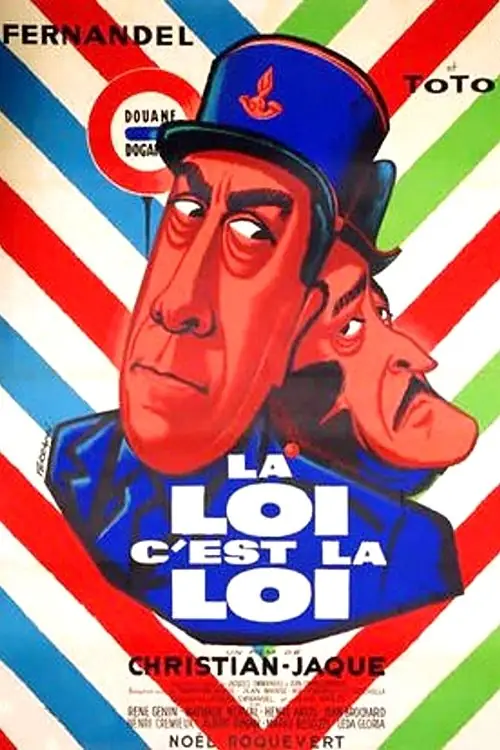
The Law Is the Law
Nestled along an improbable frontier where two nations collide, the fictional hamlet of Assola becomes a…
132 min
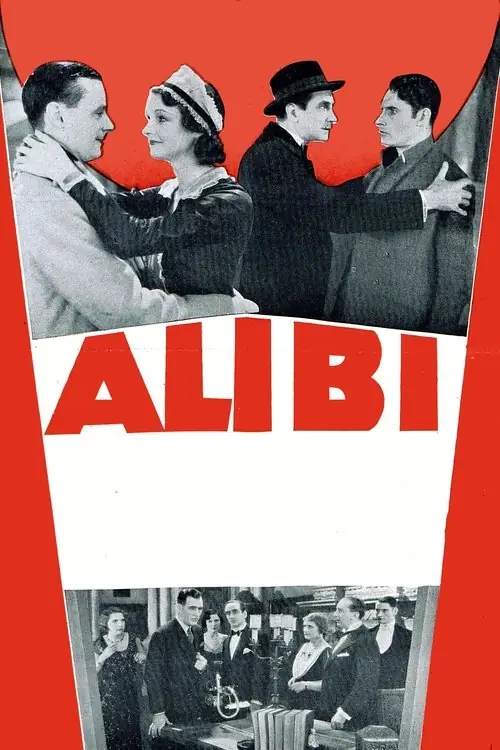
Alibi is a mystery of elegant construction and deliberate restraint, placing Hercule Poirot — that most fastidious of detectives — at the center of a puzzle that unfolds within the confined social world of a country house. A suicide has occurred, but Poirot's famously methodical instincts detect something amiss in the official account, and what begins as a seemingly straightforward tragedy gradually reveals itself as something far more intricate. The country house setting, with its locked rooms and circumscribed roster of suspects, is a classic of the genre, and the film exploits its possibilities with the kind of architectural precision that Agatha Christie's plotting demands. Poirot's investigative method — the emphasis on observation over interrogation, on the significance of small discrepancies over the drama of grand revelations — dictates the film's pacing, which proceeds with a deliberateness that some will find maddening and others will find mesmerizing. Every conversation is a potential source of evidence, every glance and hesitation a data point in Poirot's invisible calculus. The film trusts its audience to attend to these subtleties, offering few of the signposts that lesser mysteries deploy to keep viewers oriented. The pleasure lies in watching a superior mind assemble a picture from fragments that others overlook. The Belgian sleuth himself is portrayed with the requisite fussiness and vanity, but also with the sharp, unyielding intelligence that makes those traits something more than comic affectation. Poirot's fastidiousness is not mere eccentricity; it is the outward expression of a mind that cannot tolerate disorder, whether in the arrangement of a room or the logic of a suspect's alibi. This connection between personal habit and professional method is what makes the character enduringly compelling, and the performance captures it with satisfying nuance. As an adaptation of Christie, Alibi operates within the conventions of the golden-age mystery, and its satisfactions are those of the well-made puzzle rather than the psychological thriller. But within those conventions, it achieves a craftsmanship that honors its source material and reminds us why the country-house mystery, for all its apparent coziness, remains a form capable of genuine intellectual engagement.
Alibi is a mystery of elegant construction and deliberate restraint, placing Hercule Poirot — that most fastidious of detectives — at the center of a puzzle that unfolds within the confined social world of a country house. A suicide has occurred, but Poirot's famously methodical instincts detect something amiss in the official account, and what begins as a seemingly straightforward tragedy gradually reveals itself as something far more intricate. The country house setting, with its locked rooms and circumscribed roster of suspects, is a classic of the genre, and the film exploits its possibilities with the kind of architectural precision that Agatha Christie's plotting demands. Poirot's investigative method — the emphasis on observation over interrogation, on the significance of small discrepancies over the drama of grand revelations — dictates the film's pacing, which proceeds with a deliberateness that some will find maddening and others will find mesmerizing. Every conversation is a potential source of evidence, every glance and hesitation a data point in Poirot's invisible calculus. The film trusts its audience to attend to these subtleties, offering few of the signposts that lesser mysteries deploy to keep viewers oriented. The pleasure lies in watching a superior mind assemble a picture from fragments that others overlook. The Belgian sleuth himself is portrayed with the requisite fussiness and vanity, but also with the sharp, unyielding intelligence that makes those traits something more than comic affectation. Poirot's fastidiousness is not mere eccentricity; it is the outward expression of a mind that cannot tolerate disorder, whether in the arrangement of a room or the logic of a suspect's alibi. This connection between personal habit and professional method is what makes the character enduringly compelling, and the performance captures it with satisfying nuance. As an adaptation of Christie, Alibi operates within the conventions of the golden-age mystery, and its satisfactions are those of the well-made puzzle rather than the psychological thriller. But within those conventions, it achieves a craftsmanship that honors its source material and reminds us why the country-house mystery, for all its apparent coziness, remains a form capable of genuine intellectual engagement.
— Curator's log, recorded 1957±25 BCE
Nestled along an improbable frontier where two nations collide, the fictional hamlet of Assola becomes a…

Film noir occupies a peculiar position in the American cinematic imagination — a genre defined as much by its…

Murder mystery and improvisational comedy collide in this holiday-themed whodunit that transforms the most…

The Mexican crime thriller has undergone a remarkable evolution in recent decades, moving beyond narco…